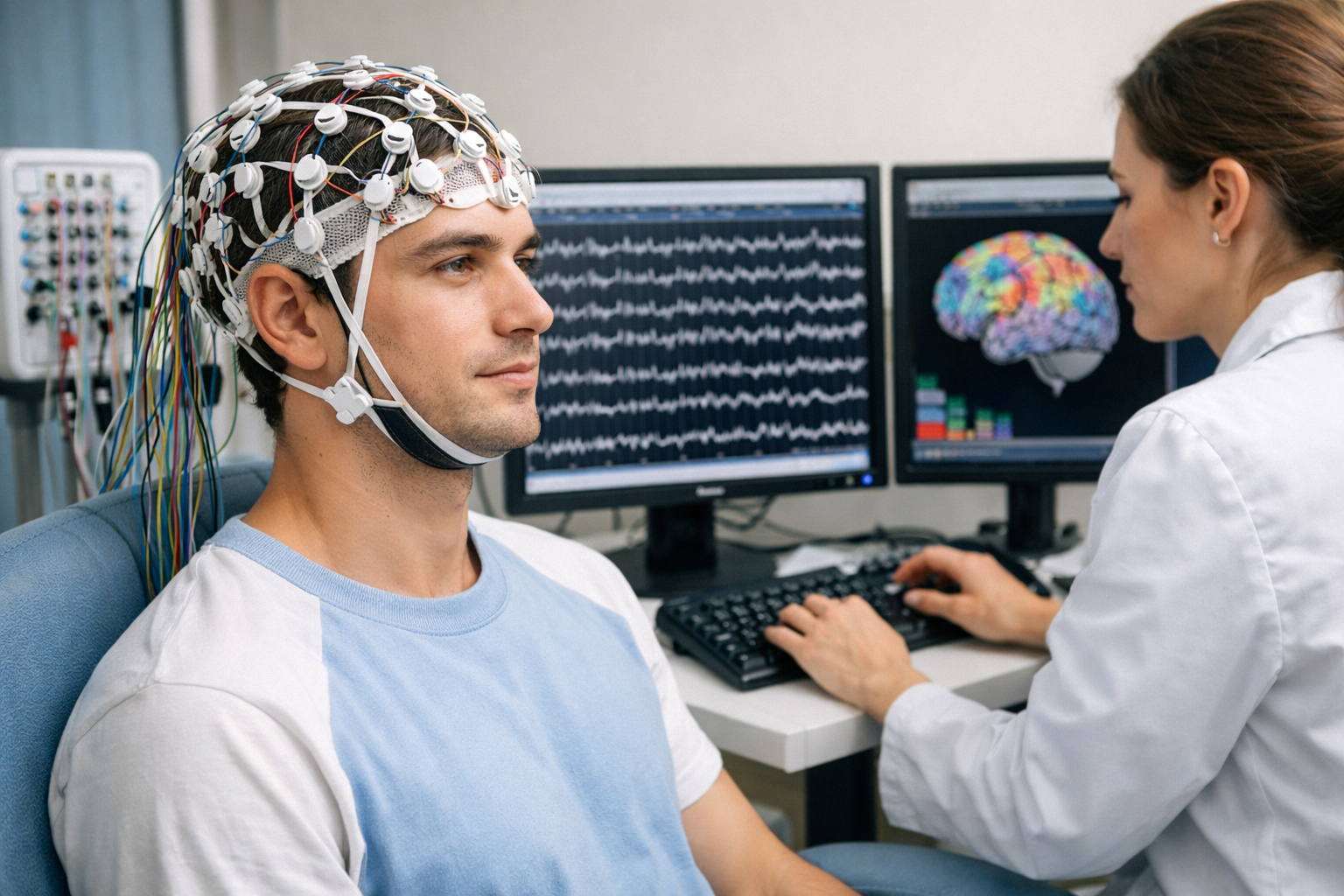
EEG Test (Electroencephalogram)
Complete Guide An EEG test, also known as an Electroencephalogram, is a medical test designed to record and analyze the brain’s natural electrical signals. It helps doctors understand how the brain functions and identify various neurological conditions. The EEG test is safe, painless, and non-invasive.
What Is an EEG Test?
An EEG test records the electrical signals produced by brain cells. Brain neurons communicate through electrical impulses. Electrodes placed on the scalp capture these signals and convert them into wave patterns for analysis.
Why Is an EEG Test Done?
EEG tests help diagnose epilepsy, seizures, brain tumors, sleep disorders, brain injuries, infections, coma, and memory problems.Types of EEG Tests Routine EEG: 20–40 minutes.
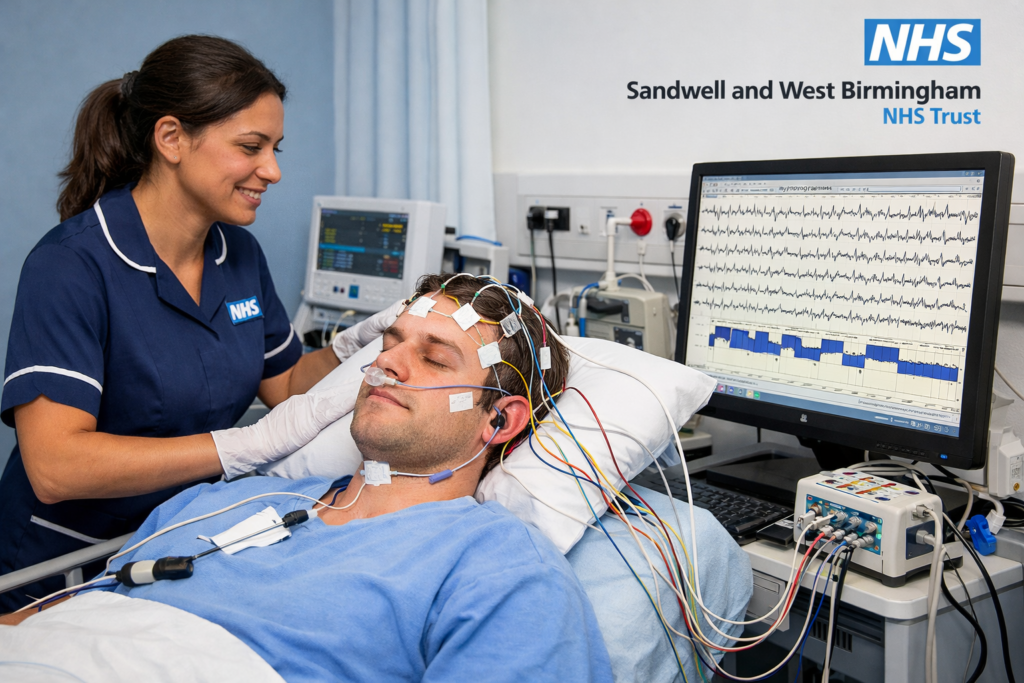
Sleep EEG:Performed during sleep. Ambulatory EEG: 24–72 hours portable monitoring.
Video EEG:
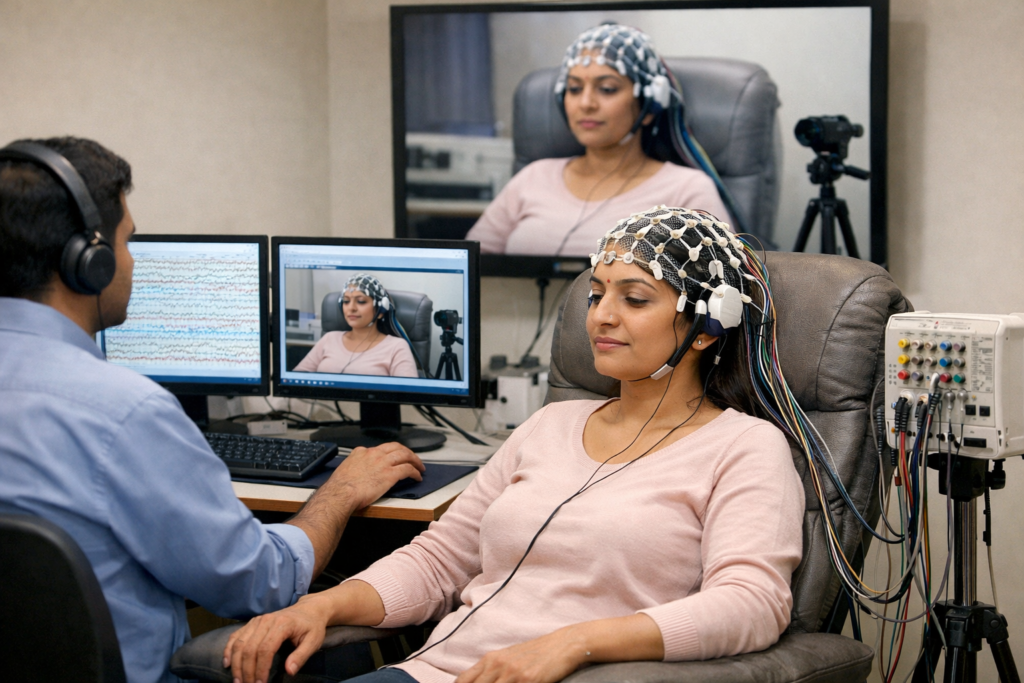
EEG with video recording.EEG Test Procedure The patient sits comfortably, electrodes are placed on the scalp, brain activity is recorded for 30–60 minutes, and then the electrodes are removed.Preparation for EEG Test Wash hair, keep it dry, avoid oils or gels, and follow doctor instructions.EEG Test Results Normal results show regular brain waves. Abnormal results may indicate seizures, injury, infection, or tumors.Risks of EEG Test EEG is very safe. Rarely, lights or deep breathing may trigger a seizure.Conclusion EEG is a safe and important test for diagnosing brain disorders
Preparation Before an EEG Test
Before undergoing an EEG test, patients are usually advised to wash their hair thoroughly and avoid using oils, gels, or sprays, as these products can interfere with electrode attachment. In some cases, doctors may ask patients to reduce sleep before the test to improve the accuracy of results. It is important to inform the healthcare provider about any medications being taken, as certain drugs can affect brain wave activity.
What Happens During the EEG Procedure
During the EEG test, small metal electrodes are gently placed on the scalp using a special paste or cap. The procedure is painless and typically takes 20 to 60 minutes, depending on the type of EEG being performed. The patient may be asked to relax, breathe deeply, or look at flashing lights to observe changes in brain activity. These actions help doctors identify abnormal electrical patterns.
Understanding EEG Test Results
EEG results are analyzed by a trained neurologist who looks for irregular brain wave patterns. Abnormal findings do not always indicate a serious condition, but they can help in diagnosing neurological disorders such as epilepsy, brain injuries, sleep disorders, and infections affecting the brain. A normal EEG does not always rule out a medical condition, which is why clinical symptoms are also considered.
Is the EEG Test Safe?
The EEG test is completely safe and non-invasive. It does not use electricity to stimulate the brain; instead, it only records existing electrical activity. Side effects are extremely rare, and the test is suitable for people of all ages, including children and elderly patients.
An Electroencephalogram (EEG) is not only a useful diagnostic tool but also one of the most widely used tests in neurology because of its ability to monitor brain function in real time. Unlike imaging tests such as MRI or CT scans, which show structures in the brain, an EEG records electrical activity, offering doctors a window into how the brain is functioning at the moment of the test. This makes it extremely helpful in diagnosing conditions that involve abnormal brain wave patterns.
One of the primary reasons doctors recommend an EEG is to evaluate seizure disorders, especially epilepsy. When a person has epilepsy, the electrical activity in the brain can produce distinctive spikes or waves that are clearly visible on an EEG recording. Detecting these abnormal patterns helps neurologists confirm a diagnosis and tailor the treatment plan.
Besides epilepsy, an EEG may be used to investigate several other neurological conditions. For example, it can help assess brain activity after a head injury or stroke, determine the presence of encephalitis (brain inflammation), and evaluate sleep disorders like narcolepsy. It also plays a role in diagnosing certain degenerative diseases of the nervous system, such as Alzheimer’s disease and other forms of dementia. In critical care, EEGs can even help monitor the depth of coma or assess whether a patient has reached brain death.
Preparing for an EEG is generally straightforward. Patients may be instructed to wash their hair the night before and avoid hair products, because clean skin improves electrode contact. Some tests, like sleep EEGs, require the patient to reduce sleep the night before to increase the likelihood of capturing abnormalities during drowsiness or sleep.
During the procedure, the technician places small electrodes on the scalp using a special adhesive or cap. These electrodes pick up electrical signals produced by brain cells, which are then transmitted to a computer that displays the wave patterns. While most EEGs last about 20 to 40 minutes, some may be longer, especially if the doctor wants to record activity during sleep or continuous monitoring over several hours. Mayo Clinic
One of the biggest advantages of EEG is that it is non-invasive and painless. It does not involve radiation or electrical stimulation; the equipment only detects existing brain activity. Most patients feel comfortable throughout the entire test. Though side effects are rare, in individuals with epilepsy, stimuli like flashing lights or deep breathing may occasionally trigger a seizure — but trained medical staff are present to manage such situations safely.
After the EEG, the neurologist reviews the recorded brain waves and writes a report that helps guide further diagnosis and treatment decisions. Normal results show predictable patterns of brain waves, while unusual activity can indicate underlying conditions that require medical attention. Regular follow-up and clear communication with your healthcare provider ensure you understand what the EEG findings mean for your overall health
Importance of Medical Consultation
EEG results should always be discussed with a qualified neurologist for proper interpretation and treatment planning. Self-diagnosis based on EEG findings should be avoided, as accurate medical advice is essential for effective care.
Important Note: This article is for educational purposes and does not replace medical advice.
importance of sleep, healthy sleep habits, sleep benefits, good sleep routine

Health Samajh ek educational health blog hai jo Urdu aur English dono zabanon mein simple, clear aur trustworthy health information provide karta hai. Is blog ka maqsad logon ko general health, common diseases, healthy diet, fitness, lifestyle aur mental health jaise topics asaan alfaaz mein samjhana hai taa keh woh apni sehat ke hawale se behtar aur informed lifestyle choices kar saken. Health Samajh par maujood tamam content sirf educational aur informational purposes ke liye hota hai aur yeh professional medical advice ya doctor ka badal nahi.