Reviewed for educational purposes
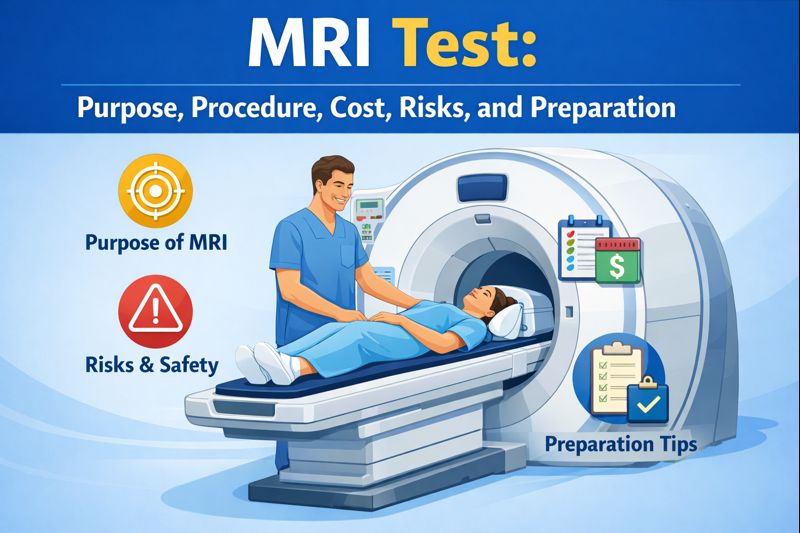
Magnetic Resonance Imaging (MRI) is one of the most advanced and reliable medical imaging tests used today. It helps doctors see highly detailed images of organs, soft tissues, bones, and nerves inside the human body without using harmful radiation. Because of its accuracy and safety, MRI is widely used around the world for diagnosing and monitoring many medical conditions.
This article explains the MRI test in complete detail, including its purpose, procedure, preparation, risks, results, and frequently asked questions, written in clear and easy‑to‑understand English.
What Is an MRI Test?
An MRI test uses a powerful magnetic field, radio waves, and a computer to create detailed cross‑sectional images of the body. Unlike X‑rays or CT scans, MRI does not use ionizing radiation, which makes it safer for repeated examinations.
MRI is especially useful for imaging soft tissues such as the brain, spinal cord, muscles, ligaments, and internal organs that cannot be seen clearly with other imaging techniques.
Why Is an MRI Test Done?
Doctors recommend an MRI test for many diagnostic and monitoring purposes, including:
- Detecting tumors, cysts, or abnormal growths
- Diagnosing brain disorders such as stroke or multiple sclerosis
- Examining spinal cord and nerve problems
- Identifying joint, ligament, and muscle injuries
- Checking heart structure and blood vessels
- Detecting infections or inflammation
- Monitoring disease progression or treatment response
MRI provides highly accurate images, helping doctors make better treatment decisions.
Types of MRI Scans
MRI scans are classified based on the body part examined and the technique used:
Common Types
- Brain MRI – Used for stroke, tumors, epilepsy, and neurological disorders
- Spine MRI – Helps diagnose slipped discs, spinal stenosis, and nerve compression
- Joint MRI – Commonly used for knee, shoulder, and ligament injuries
- Cardiac MRI – Evaluates heart structure and function
- Abdominal MRI – Examines liver, kidneys, pancreas, and other organs
Contrast MRI
In some cases, a special contrast dye (usually gadolinium) is injected into a vein to enhance image clarity and highlight abnormalities.
MRI Test Procedure (Step‑by‑Step)
The MRI procedure is painless and non‑invasive. The usual steps include:
- You may be asked to change into a hospital gown
- All metal objects such as jewelry, watches, or belts must be removed
- You lie flat on a movable table
- The table slides into the MRI machine
- The machine produces loud tapping or knocking sounds during scanning
- You must remain still to ensure clear images
- The scan usually takes 20 to 45 minutes, depending on the test type
If a contrast MRI is required, the dye is injected before or during the scan.
How to Prepare for an MRI Test
Preparation depends on the type of MRI being performed:
- In most cases, no fasting is required
- Inform your doctor if you have metal implants or medical devices
- Tell the staff if you are pregnant or suspect pregnancy
- Inform the doctor if you suffer from claustrophobia
- Follow any specific instructions provided by the imaging center
Who Should Not Have an MRI?
MRI may not be suitable for individuals with:
- Pacemakers or defibrillators
- Cochlear (ear) implants
- Certain metal clips or artificial joints
- Metal fragments in the body
Always share your complete medical history with your doctor before scheduling an MRI.
Is MRI Safe?
Yes, MRI is considered a very safe imaging test for most people. Since it does not use radiation, it is safer than many other imaging methods. However, safety depends on proper screening for metal objects and implants.
Pregnant women may undergo MRI if medically necessary, but contrast dye is usually avoided unless absolutely required.
MRI Risks and Side Effects
MRI has minimal risks, but possible issues include:
- Discomfort from lying still for a long time
- Anxiety or claustrophobia inside the machine
- Rare allergic reactions to contrast dye
Serious complications are extremely rare when safety guidelines are followed.
MRI vs CT Scan
Many patients ask whether MRI is better than a CT scan:
- MRI provides better soft‑tissue detail and uses no radiation
- CT scan is faster and better for detecting bone injuries and emergencies
The choice depends on the medical condition and doctor’s recommendation.
Understanding MRI Test Results
MRI images are reviewed by a radiologist, who sends a detailed report to your doctor. Results may show:
- Normal findings
- Inflammation or infection
- Tumors or abnormal masses
- Tissue or nerve damage
Your doctor will explain the results and suggest further tests or treatment if needed.
MRI Cost (General Information)
The cost of an MRI test varies depending on:
- Type of MRI scan
- Use of contrast dye
- Medical facility and location
Your healthcare provider or imaging center can give exact cost details.
Frequently Asked Questions (FAQs)
Is an MRI test painful?
No, MRI is completely painless.
How long does an MRI scan take?
Most scans take between 20 and 45 minutes.
Can children undergo MRI?
Yes, MRI is safe for children under proper medical supervision.
Can I eat before an MRI?
In most cases, yes, unless your doctor advises otherwise.
What if I feel claustrophobic?
Open MRI machines or mild sedation may be used if needed.
Is MRI safe for pregnant women?
MRI is generally safe, but contrast dye is avoided unless necessary.
MRI for Special Situations
MRI for Children
MRI scans are commonly performed on children when detailed imaging is required. The test itself is safe, but young children may find it difficult to stay still. In such cases, light sedation may be used under medical supervision. Parents are usually allowed to stay nearby to help the child feel comfortable.
MRI for Elderly Patients
Elderly patients can safely undergo MRI scans. However, doctors carefully review medical history, especially the presence of implants, joint replacements, or chronic conditions, before recommending the test.
MRI for Pregnant Women
MRI is generally considered safe during pregnancy because it does not use radiation. However, it is usually avoided in the first trimester unless absolutely necessary. Contrast dye is not recommended during pregnancy unless the benefits clearly outweigh the risks.
Claustrophobia and MRI Scan
Some patients feel anxious or claustrophobic inside the MRI machine. To manage this:
- Open MRI machines may be used
- Relaxation techniques can help
- Mild sedatives may be prescribed if required
- Listening to music during the scan may reduce anxiety
Always inform the medical staff if you feel uncomfortable before the scan begins.
Benefits of MRI Test
MRI offers several advantages over other imaging methods:
- No exposure to harmful radiation
- Highly detailed images of soft tissues
- Early detection of diseases
- Helps guide accurate treatment decisions
- Useful for monitoring long-term conditions
Limitations of MRI
Despite its benefits, MRI has some limitations:
- Expensive compared to other imaging tests
- Not suitable for patients with certain implants
- Longer scan time compared to CT scans
- Motion can affect image quality
Your doctor will decide if MRI is the best option based on your condition.
How Accurate Is an MRI Test?
MRI is considered one of the most accurate imaging techniques for soft tissues. It can detect abnormalities at an early stage, making it highly valuable for diagnosis. However, accuracy also depends on the quality of equipment and patient cooperation during the scan.
When Should You Get an MRI?
Your doctor may recommend an MRI if:
- Symptoms persist despite treatment
- Other imaging tests are inconclusive
- Detailed evaluation of organs or nerves is needed
- Monitoring of a known medical condition is required
Conclusion
The MRI test is a highly advanced, safe, and reliable diagnostic tool that plays a crucial role in modern medicine. By providing detailed images without radiation, MRI helps doctors diagnose conditions early, plan effective treatments, and monitor patient progress. Understanding the MRI procedure, benefits, risks, and limitations can help patients approach the test with confidence and peace of mind.
Medical Disclaimer
This content is for informational purposes only and does not substitute professional medical advice. Always consult a qualified healthcare provider for diagnosis and treatment.
Disclaimer: This article is intended for general informational purposes only and should not be considered medical advice.

Health Samajh ek educational health blog hai jo Urdu aur English dono zabanon mein simple, clear aur trustworthy health information provide karta hai. Is blog ka maqsad logon ko general health, common diseases, healthy diet, fitness, lifestyle aur mental health jaise topics asaan alfaaz mein samjhana hai taa keh woh apni sehat ke hawale se behtar aur informed lifestyle choices kar saken. Health Samajh par maujood tamam content sirf educational aur informational purposes ke liye hota hai aur yeh professional medical advice ya doctor ka badal nahi.