Introduction
Ultrasound Test, also known as ultrasonography, is a widely used medical imaging test that helps doctors examine internal organs of the body safely and accurately. It uses high-frequency sound waves to create real-time images of organs, tissues, and blood flow. Ultrasound is painless, non-invasive, and does not use radiation, making it one of the safest diagnostic tests available.
Ultrasound is commonly used to diagnose conditions related to the abdomen, pregnancy, heart, blood vessels, kidneys, liver, thyroid, and many other organs. This article provides a complete and easy-to-understand guide about ultrasound tests, their types, procedure, uses, benefits, risks, and preparation.
What Is an Ultrasound Test?
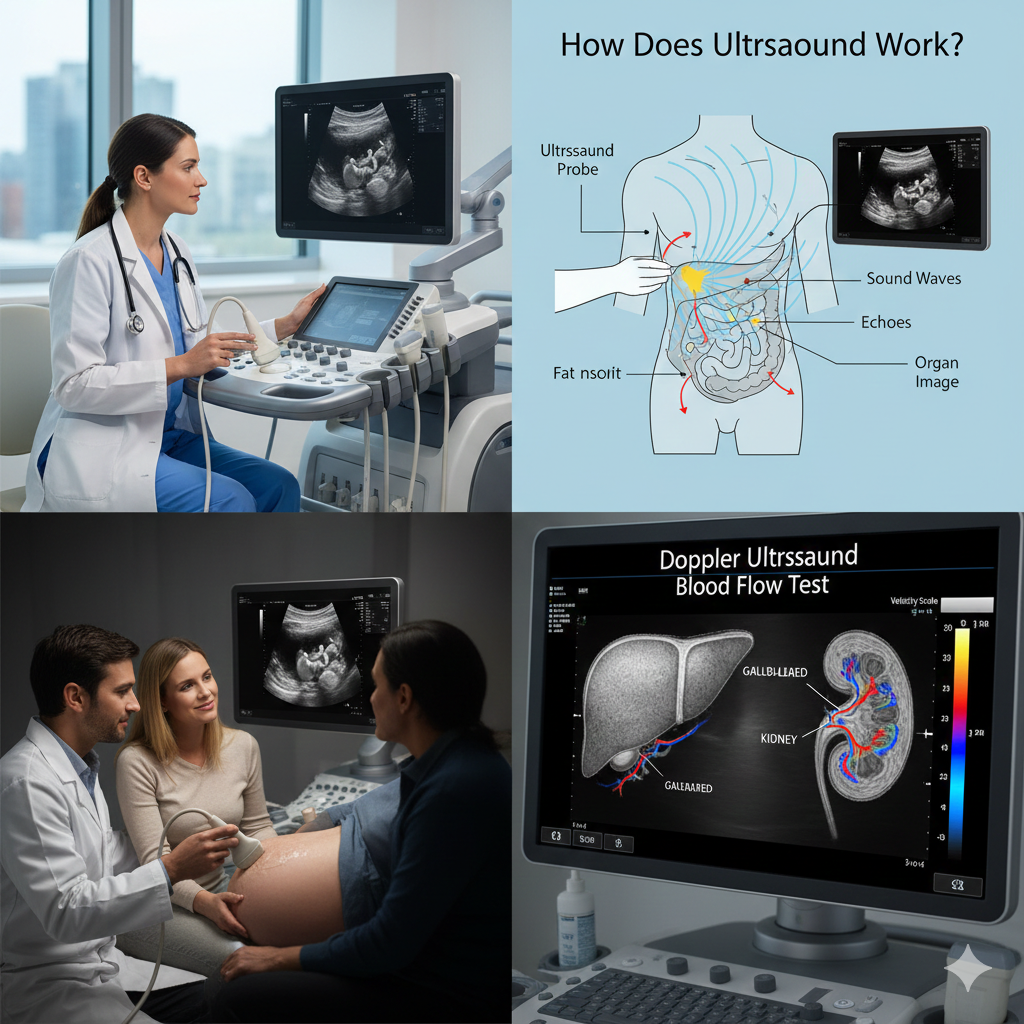
An ultrasound test is a diagnostic imaging procedure that uses sound waves to produce images of structures inside the body. These sound waves bounce off organs and tissues, and the returning echoes are converted into images on a screen.
Unlike X-rays or CT scans, ultrasound does not use ionizing radiation. Because of this, it is safe for pregnant women, children, and repeated use.
How Does Ultrasound Work?
Ultrasound works using a device called a transducer. The transducer sends high-frequency sound waves into the body. These sound waves travel through tissues and reflect back when they hit organs or fluids.
The reflected sound waves are received by the transducer and converted into images by a computer. These images appear in real time on a monitor, allowing doctors to observe movement, blood flow, and organ function.
Types of Ultrasound Tests
There are different types of ultrasound tests depending on the area being examined and the purpose of the test.
1. Abdominal Ultrasound
This test examines organs in the abdomen such as:
- Liver
- Gallbladder
- Pancreas
- Kidneys
- Spleen
- Urinary bladder
It is commonly used to detect stones, tumors, infections, or organ enlargement.
2. Pelvic Ultrasound
Pelvic ultrasound is used to examine reproductive organs.
In women, it checks:
- Uterus
- Ovaries
- Fallopian tubes
In men, it checks:
- Prostate gland
- Seminal vesicles
3. Pregnancy Ultrasound
Pregnancy ultrasound monitors the development of the fetus during pregnancy. It helps to:
- Confirm pregnancy
- Check fetal growth
- Detect birth defects
- Determine baby’s position
4. Doppler Ultrasound
Doppler ultrasound measures blood flow through blood vessels. It helps diagnose:
- Blocked arteries
- Blood clots
- Poor circulation
- Heart valve problems
5. Echocardiography
Echocardiography is a specialized ultrasound of the heart. It evaluates:
- Heart chambers
- Heart valves
- Pumping function
- Blood flow
6. Breast Ultrasound
Used to examine breast lumps and differentiate between solid masses and fluid-filled cysts. It is often used alongside mammography.
7. Thyroid Ultrasound
This test examines the thyroid gland to detect:
- Thyroid nodules
- Enlargement
- Cysts
- Tumors
8. Musculoskeletal Ultrasound
Used to examine muscles, joints, tendons, and ligaments. It helps diagnose:
- Sports injuries
- Tears
- Inflammation
- Joint problems
- healthsamajh.com
Why Is an Ultrasound Test Done?
Doctors may recommend an ultrasound test to:
- Identify the cause of pain, swelling, or infection
- Detect tumors, cysts, or stones
- Monitor pregnancy and fetal development
- Evaluate blood flow and heart function
- Guide procedures like biopsies or fluid drainage
Who Should Get an Ultrasound?
Ultrasound may be recommended for:
- Pregnant women
- Patients with abdominal pain
- People with suspected kidney or gallstones
- Heart patients
- Individuals with thyroid or breast lumps
- Patients with blood circulation problems
Ultrasound Test Procedure
The ultrasound procedure is simple and usually completed within 15–45 minutes.
Step-by-Step Procedure
- The patient lies on an examination table
- A special gel is applied to the skin
- The transducer is moved over the area
- Images appear on a screen in real time
- The gel is wiped off after the test
The procedure is painless and does not require anesthesia.
Preparation for Ultrasound Test
Preparation depends on the type of ultrasound.
Abdominal Ultrasound
- Fasting for 6–8 hours may be required
- Drink water if bladder examination is needed
Pelvic Ultrasound
- Full bladder may be required
- Drink water before the test
Pregnancy Ultrasound

- No special preparation (early pregnancy may need a full bladder)
Always follow your doctor’s instructions.
Is Ultrasound Safe?
Yes, ultrasound is considered very safe. It does not use radiation and has no known harmful effects when performed correctly. This is why it is widely used during pregnancy and for children.
Risks and Limitations of Ultrasound
Limitations
- Image quality may be reduced in obese patients
- Gas in intestines can interfere with images
- Cannot see through bones or air
Risks
Ultrasound has no significant risks. Mild discomfort may occur due to pressure from the transducer.
Ultrasound vs Other Imaging Tests
| Test | Radiation | Safety | Cost |
|---|---|---|---|
| Ultrasound | No | Very Safe | Low |
| X-ray | Yes | Limited | Low |
| CT Scan | Yes | Moderate | High |
| MRI | No | Very Safe | Very High |
Cost of Ultrasound Test
The cost of ultrasound varies depending on:
- Type of ultrasound
- Hospital or diagnostic center
- City and country
In many countries, including Pakistan, ultrasound tests are affordable and available in government hospitals.
Ultrasound Test Results
Results are interpreted by a radiologist and sent to the doctor. The doctor explains:
- Normal findings
- Abnormal results
- Further tests or treatment if needed
Advantages of Ultrasound
- Non-invasive
- No radiation
- Painless
- Real-time imaging
- Affordable
- Widely available
When to See a Doctor
Consult a doctor if:
- You have persistent pain
- You notice swelling or lumps
- You are pregnant
- You have abnormal test symptoms
Role of Ultrasound in Early Diagnosis
Ultrasound plays a very important role in the early diagnosis of many diseases. Because it can show real-time images of internal organs, doctors are able to detect problems at an early stage before symptoms become severe. Early diagnosis helps in starting timely treatment, reducing complications, and improving patient outcomes.
For example, ultrasound can detect gallstones, kidney stones, liver enlargement, cysts, tumors, and fluid collection at an early stage. In pregnancy, early ultrasound helps confirm fetal heartbeat, identify ectopic pregnancy, and estimate gestational age accurately.
Ultrasound-Guided Medical Procedures
Another major advantage of ultrasound is its use in guiding medical procedures. Doctors use ultrasound imaging to perform procedures more safely and accurately.
Common ultrasound-guided procedures include:
- Needle biopsy
- Fluid aspiration
- Drainage of abscesses
- Placement of catheters
By using ultrasound guidance, doctors can see exactly where the needle or instrument is going, which reduces the risk of injury and increases the success rate of the procedure.
Ultrasound in Emergency Medicine
Ultrasound is widely used in emergency departments because it is fast, portable, and provides immediate results. In emergency situations, ultrasound helps doctors quickly assess life-threatening conditions.
Emergency ultrasound is commonly used to:
- Detect internal bleeding
- Evaluate abdominal trauma
- Check heart activity in cardiac arrest
- Diagnose ectopic pregnancy
- Assess fluid in lungs or abdomen
Because ultrasound machines can be moved easily, they are especially useful in critical care units and ambulances.
Technological Advancements in Ultrasound
Modern ultrasound technology has improved significantly over the years. Advanced ultrasound machines now provide high-resolution images, 3D and 4D imaging, and better Doppler capabilities.
These advancements allow doctors to:
- Visualize organs more clearly
- Assess blood flow accurately
- Monitor fetal development in detail
- Detect abnormalities earlier than before
With continuous technological progress, ultrasound is becoming even more accurate, reliable, and widely used in medical practice.
Final Note
Ultrasound is not only a diagnostic tool but also an essential part of modern healthcare. Its safety, affordability, and versatility make it one of the most trusted imaging tests worldwide. Regular use of ultrasound for diagnosis and monitoring helps doctors provide better care and ensures early detection of many medical conditions.
Conclusion
Ultrasound is one of the most important and safest diagnostic imaging tests in modern medicine. It helps doctors diagnose, monitor, and treat many medical conditions without exposing patients to radiation. From pregnancy monitoring to heart and abdominal examinations, ultrasound plays a vital role in healthcare.
Understanding the purpose, procedure, and benefits of ultrasound testing allows patients to feel more confident and prepared. Early diagnosis through ultrasound can lead to better treatment outcomes and improved quality of life.
new article healthsamajh.com
Disclaimer: This article is intended for general informational purposes only and should not be considered medical advice

Health Samajh ek educational health blog hai jo Urdu aur English dono zabanon mein simple, clear aur trustworthy health information provide karta hai. Is blog ka maqsad logon ko general health, common diseases, healthy diet, fitness, lifestyle aur mental health jaise topics asaan alfaaz mein samjhana hai taa keh woh apni sehat ke hawale se behtar aur informed lifestyle choices kar saken. Health Samajh par maujood tamam content sirf educational aur informational purposes ke liye hota hai aur yeh professional medical advice ya doctor ka badal nahi.