Introduction
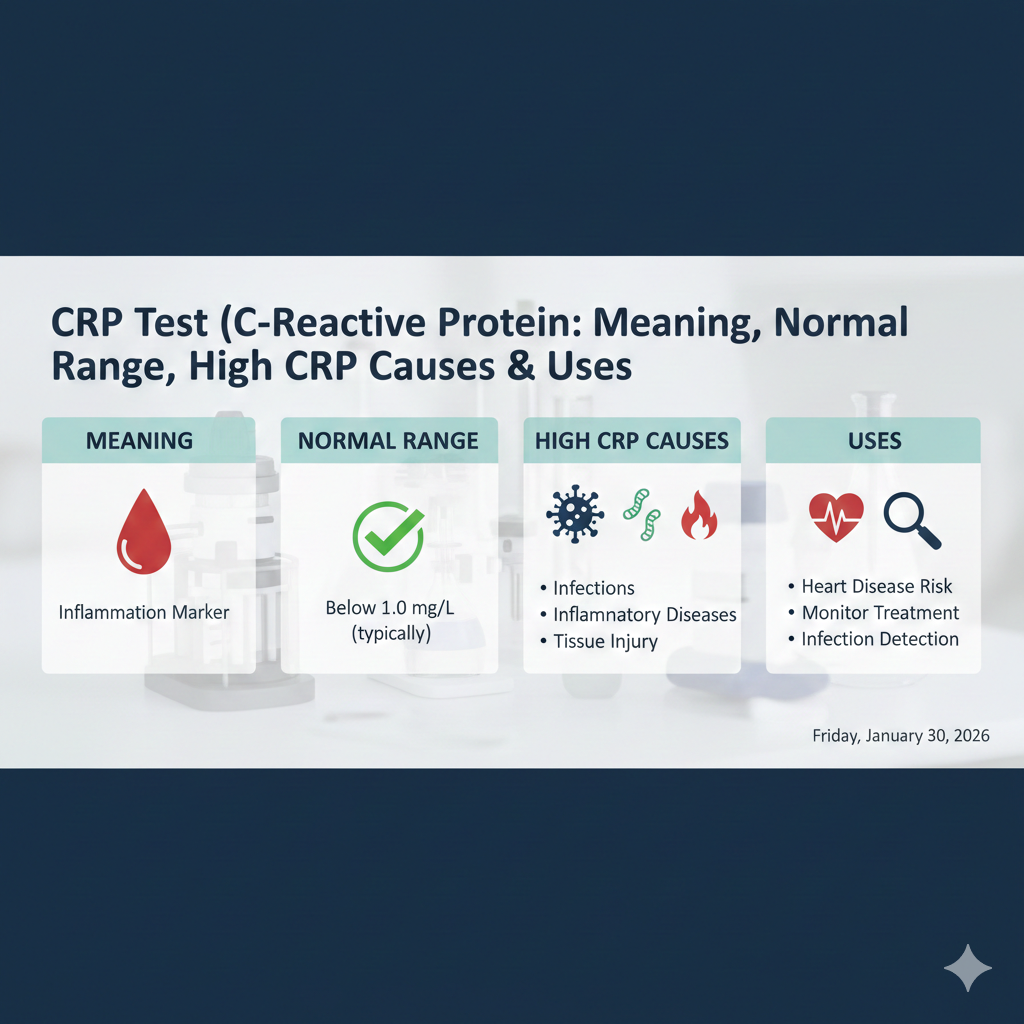
The CRP Test, also known as the C-Reactive Protein Test, is a blood test used to detect inflammation in the body. Inflammation may occur due to infection, injury, autoimmune diseases, or chronic health conditions such as heart disease.
C-Reactive Protein is produced by the liver. When inflammation develops anywhere in the body, the liver releases more CRP into the blood. Because CRP levels rise quickly, doctors use this test to check disease activity and treatment response.
What Is CRP Test?
CRP Test measures the level of C-Reactive Protein in the blood. Normally, CRP remains very low. When there is inflammation, infection, or tissue damage, CRP levels increase rapidly.
CRP itself is not a disease. It is a marker that indicates something abnormal is happening inside the body.
Why Is the CRP Test Done?
Doctors recommend a CRP test for many medical reasons, including:
- Detecting bacterial and viral infections
- Finding inflammation in the body
- Monitoring autoimmune diseases
- Assessing heart disease risk
- Checking response to treatment
- Detecting post-surgery infection
The CRP test does not diagnose a specific disease but helps doctors decide further testing.
Conditions Where CRP Test Is Useful
CRP test is commonly used in the diagnosis and monitoring of:
- Bacterial infections
- Rheumatoid arthritis
- Lupus (SLE)
- Tuberculosis
- Inflammatory bowel disease
- Heart disease
- Certain cancers
- Severe injury or trauma
Types of CRP Test
H3: Standard CRP Test
This test detects moderate to severe inflammation and is mostly used for infections and inflammatory conditions.
High-Sensitivity CRP (hs-CRP) Test
This test detects very low CRP levels and is mainly used to assess the risk of heart attack and stroke.
CRP Test Procedure
CRP test is a simple blood test.
Step-by-Step Procedure
- Skin is cleaned with antiseptic
- A small needle is inserted into a vein
- Blood sample is collected
- Sample is sent to the laboratory
Time required: 5 minutes
Pain level: Mild and temporary
CRP Test Preparation
No special preparation is required for the CRP test.
- Fasting is not required
- Normal diet is allowed
- Inform your doctor about medicines such as steroids
CRP Normal Range
CRP normal values may vary slightly by laboratory.
Standard CRP Test
Normal value: Less than 1 mg/dL (or less than 10 mg/L)
hs-CRP Test (Heart Risk)
Low risk: Less than 1 mg/L
Moderate risk: 1 to 3 mg/L
High risk: More than 3 mg/L
Always compare your result with the reference range mentioned on your report.
What Does High CRP Mean?
High CRP levels indicate inflammation in the body.
Mildly High CRP
- Minor infection
- Obesity
- Smoking
- Stress
Moderately High CRP
- Chronic inflammation
- Viral infections
- Autoimmune diseases
H3: Very High CRP
- Severe bacterial infection
- Sepsis
- Major injury
- Advanced inflammatory disease
What Does Low CRP Mean?
Low or normal CRP levels usually indicate:
- No active inflammation
- Lower risk of heart disease
- Good response to treatment
CRP Test and Heart Disease
The high-sensitivity CRP test helps measure inflammation in blood vessels. High hs-CRP levels increase the risk of:
- Heart attack
- Stroke
- Coronary artery disease
Doctors often combine hs-CRP with lipid profile, blood pressure, ECG, and echo test.
CRP Test vs ESR Test
CRP Test
- Rises quickly
- More accurate
- Useful in acute inflammation
ESR Test
- Rises slowly
- Less specific
- Useful in chronic conditions
Can CRP Be High Without Symptoms?
Yes. CRP levels can be high even without clear symptoms, especially in early infections or heart disease risk. This makes CRP a useful screening test.
How to Reduce High CRP Levels
Lifestyle Changes
- Stop smoking
- Maintain healthy weight
- Exercise regularly
- Control stress

Dietary Changes
- Eat fruits and vegetables
- Omega-3 rich foods
- Avoid processed food
- Reduce sugar intake
Medical Treatment
- Treat underlying disease
- Medicines as prescribed by doctor
Risks of CRP Test
CRP test is very safe.
- Slight pain
- Small bruise
- Rare infection
When Should You Get a CRP Test?
You may need a CRP test if you have:
- Fever of unknown cause
- Joint pain or swelling
- Chest pain
- Long-term fatigue
- Autoimmune disease
Related Tests (Internal Linking)
- ESR Test
- CBC Test
- Lipid Profile Test
- ECG Test
- Echo Test
- HbA1c Test
Conclusion
CRP Test is a simple but powerful blood test that helps detect inflammation, monitor disease activity, and assess heart disease risk. Although it does not provide a final diagnosis, it plays an important role in medical evaluation and treatment planning.
Always consult a qualified doctor for proper interpretation of CRP test results.
Disclaimer: This article is intended for general informational purposes only and should not be considered medical advice

Health Samajh ek educational health blog hai jo Urdu aur English dono zabanon mein simple, clear aur trustworthy health information provide karta hai. Is blog ka maqsad logon ko general health, common diseases, healthy diet, fitness, lifestyle aur mental health jaise topics asaan alfaaz mein samjhana hai taa keh woh apni sehat ke hawale se behtar aur informed lifestyle choices kar saken. Health Samajh par maujood tamam content sirf educational aur informational purposes ke liye hota hai aur yeh professional medical advice ya doctor ka badal nahi.