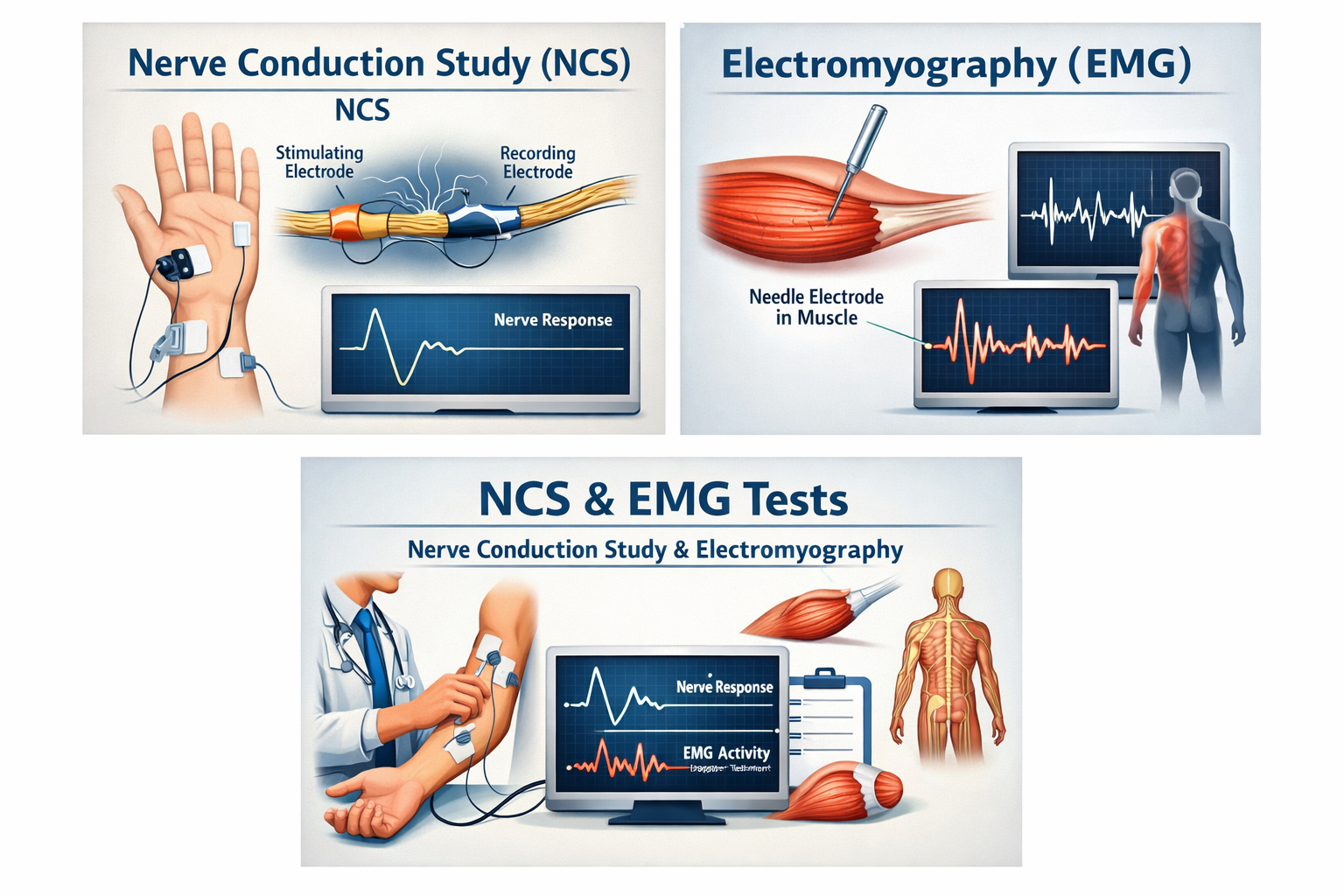
The NCS/EMG testis actually a combination of two separate but related tests often performed together to get a complete picture of nerve and muscle function. It’s a crucial diagnostic tool used by neurologists.
NCS stands for (Nerve Conduction Study).
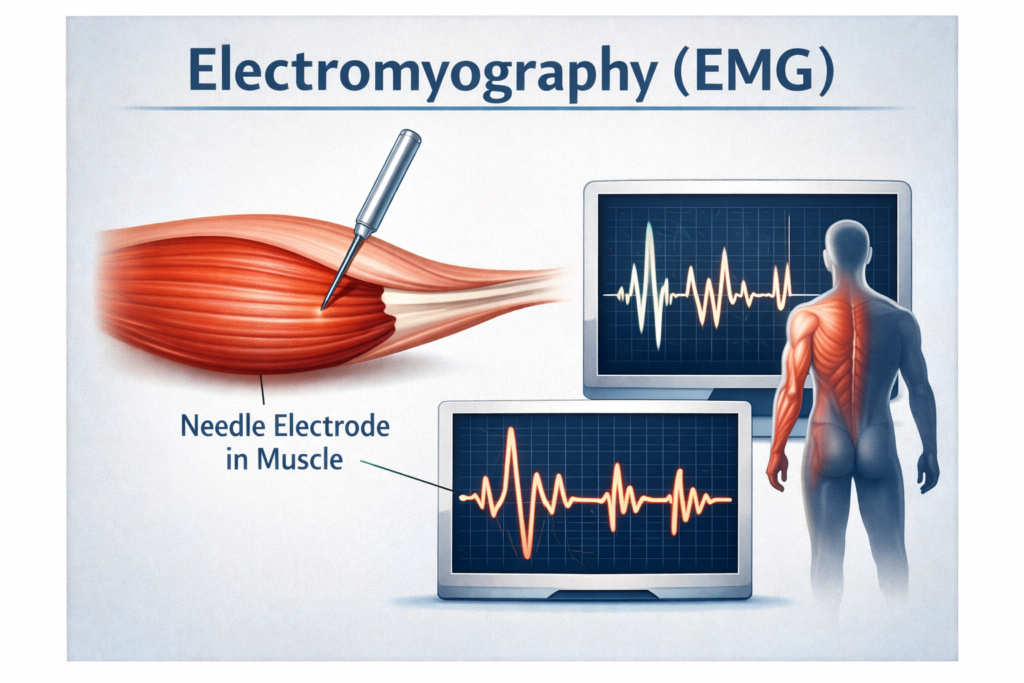
EMG stands for (Electromyography).
. Unicare center : test performance centre link
Let’s break it down in d
1. What is the Purpose of the Test?
The primary goal of an NCS/EMG is to diagnose conditions that affect your nerves and muscles.
It helps doctors:
Pinpoint the location of a nerve injury or compression (e.g., Carpal Tunnel Syndrome, Ulnar Neuropathy).
Determine the type and extent of nerve damage.
Differentiate between a nerve disorder (neuropathy) and a muscle disorder (myopathy).
Diagnose specific conditions like:
Peripheral Neuropathy (common in diabetes)
Carpal Tunnel Syndrome
Pinched Nerves (e.g., from a herniated disc in the neck or back – radiculopathy)
Muscular Dystrophies
Amyotrophic Lateral Sclerosis (ALS)
Myasthenia Gravis
Sciatica
2. How is the Test Performed?
The test is typically performed by a neurologist or a specially trained technician. It usually takes between 30 to 90 minutes, depending on how many nerves and muscles need to be tested.
Part A: Nerve Conduction Study (NCS)
What happens:
You will sit or lie down. The technician will place surface electrodes (small metal discs) on your skin over the nerve to be tested.
The Stimulus:
A second electrode will deliver a very brief, mild electrical impulse to the nerve. This feels like a quick, small static shock or a tingling sensation. It might make your muscle twitch.
What it measures:
The electrodes record how fast and how well the electrical signal travels down the nerve. The speed is called the conduction velocity. A slow or weak signal indicates nerve damage.
Part B: Electromyography (EMG)
What happens:
This part involves a very fine, thin, sterile needle electrode that is inserted into specific muscles. The needle is like a microphone that listens to your muscle activity.
The Process:
You will be asked to relax the muscle completely, and then to contract it gently (e.g., bending your arm). The needle is moved slightly a few times within the muscle to assess different areas.
What it measures:
The electrode picks up the electrical activity produced by your muscle fibers.
It translates this activity in to sounds (like static popping & crackling on a radio) visual waves forms on a screen. The Doctor interprets these signals to see if the muscles are responding to nerve signals normally.
Note: The NCS is usually done first, followed by the EMG.
3. How to Prepare for the Test
Skin:
Avoid using any lotions, oils, or creams on your arms or legs on the day of the test.
Clothing:
Wear loose, comfortable clothing that allows easy access to the area being tested (e.g., shorts and a t-shirt).
Medications:
Inform your doctor about all medications you are taking, especially blood thinners (like Warfarin, Aspirin, Clopidogrel) or if you have a pacemaker or defibrillator.
Caffeine/Avoid Stimulants:
It’s often recommended to avoid caffeine and cigarettes for a few hours before the test, as they can sometimes affect the results.
4. What Does it Feel Like? Is it Painful?
This is a common concern. The experience varies from person to person.
NCS:The electrical shocks are brief and surprising but usually not severely painful. Most people describe it as a strong tingling or a zap.
EMG:The needle insertion can cause some discomfort or a dull ache, similar to getting an acupuncture needle or a vaccine. The sensation is usually minor and temporary.
Important:
The test is generally well-tolerated. If you are anxious or have a low pain tolerance, you can discuss it with the doctor beforehand. Communication is key—tell the technician if you are uncomfortable.
5. After the Test
There is no special recovery time. you can usually resume your normal activities immediately.
You might have some minor soreness or small bruises where the needle was inserted for a day or two. This is normal.
The results are not immediate. The data needs to be analyzed by the doctor, who will then interpret the findings in the context of your symptoms and medical history. Your referring doctor will usually discuss the results with you at a follow-up appointment.
Summary of Key Points:
Full Name
Nerve Conduction Study (NCS) Electromyography (EMG)
Disclaimer: This article is intended for general informational purposes only and should not be considered medical advice. For sleep-related health concerns, consult a qualified healthcare professional.

Health Samajh ek educational health blog hai jo Urdu aur English dono zabanon mein simple, clear aur trustworthy health information provide karta hai. Is blog ka maqsad logon ko general health, common diseases, healthy diet, fitness, lifestyle aur mental health jaise topics asaan alfaaz mein samjhana hai taa keh woh apni sehat ke hawale se behtar aur informed lifestyle choices kar saken. Health Samajh par maujood tamam content sirf educational aur informational purposes ke liye hota hai aur yeh professional medical advice ya doctor ka badal nahi.