Introduction
(ERCP TEST)
ERCP, short for Endoscopic Retrograde Cholangiopancreatography, is a specialized medical procedure used to examine the bile ducts, pancreatic ducts, and gallbladder. It is both diagnostic and therapeutic, meaning it can detect diseases and also treat certain conditions in the same session.
Doctors often recommend ERCP when patients experience jaundice, unexplained abdominal pain, suspected bile duct stones, or pancreatic disorders. Unlike other imaging tests, ERCP allows direct access to the ducts and the possibility of performing interventions such as stone removal or stent placement.
This article is a comprehensive guide written in simple, human-friendly language. It explains why ERCP is done, how it is performed, what tests are involved, possible risks, post-procedure care, and interpretation of results.
Do you want read article in urdu? click here
What is ERCP?
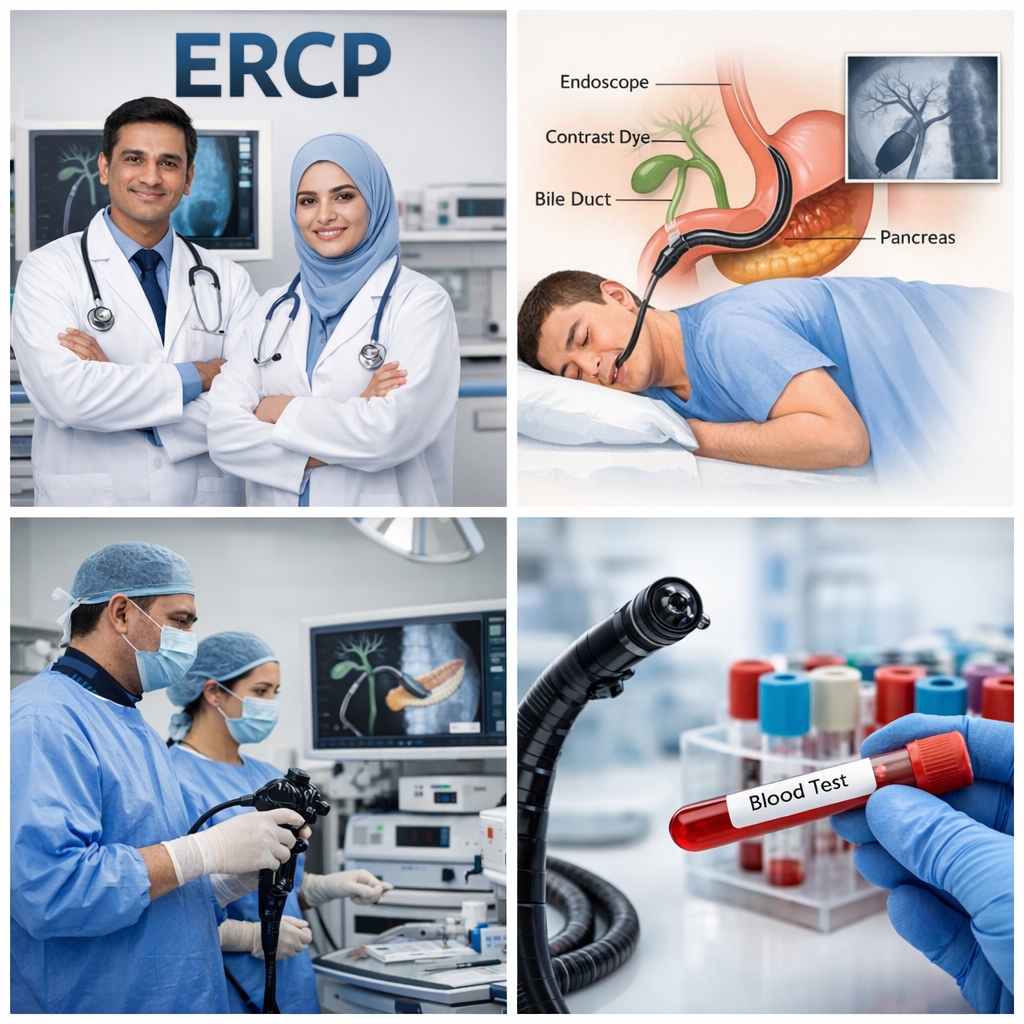
ERCP is a minimally invasive endoscopic procedure that combines endoscopy and fluoroscopy (real-time X-ray) to examine the bile and pancreatic ducts. The doctor inserts a flexible tube (endoscope) through the mouth, passes it into the stomach and duodenum, and injects a contrast dye into the ducts to make them visible on X-ray.
The procedure helps to:
- Identify blockages or strictures in bile or pancreatic ducts
- Detect gallstones, tumors, or inflammation
- Remove stones or place stents to improve bile flow
- Collect tissue samples for biopsy
Why is ERCP Done?
ERCP is performed for several medical reasons, both diagnostic and therapeutic.
Common Indications:
- Bile duct stones: Detect and remove gallstones causing blockages
- Bile duct strictures: Narrowing due to inflammation, scarring, or tumors
- Pancreatic duct problems: Chronic pancreatitis or obstruction
- Tumors: Evaluate tumors in pancreas, bile duct, or liver
- Jaundice: Determine the cause of yellowing of skin and eyes
- Cholangitis: Investigate infections of bile ducts
Example: A patient with sudden jaundice and severe upper abdominal pain may undergo ERCP to locate and remove a bile duct stone.
Preparation for ERCP
Proper preparation ensures safety and accuracy.
Patient Instructions:
- Fasting: No food or drink for at least 6–8 hours before the procedure
- Medications: Doctors may advise stopping blood thinners temporarily
- Allergies: Inform doctor about any allergies to iodine or contrast dye
- Medical History: Discuss previous heart, lung, or liver problems
- Consent: Sign informed consent after understanding the risks
Pre-Procedure Tests:
- Blood tests: CBC, liver function, kidney function, coagulation profile
- Imaging: Ultrasound, CT scan, or MRI to locate the problem area
How ERCP is Performed
ERCP is usually performed in a hospital or specialized endoscopy suite under sedation or anesthesia.
Step-by-Step Procedure:
- Patient lies on the left side on the procedure table
- Sedation is administered for comfort
- A flexible endoscope is inserted through the mouth, passing down the esophagus, stomach, and into the duodenum
- The doctor identifies the opening of the bile and pancreatic ducts (ampulla of Vater)
- A contrast dye is injected into the ducts
- Real-time X-ray (fluoroscopy) captures images of the ducts
- If necessary, interventions such as stone removal, stent placement, or tissue biopsy are performed
- The endoscope is carefully withdrawn, and the patient is monitored until recovery from sedation
Duration: Typically 30–90 minutes depending on complexity.
Types of ERCP Procedures
- Diagnostic ERCP: Mainly to identify blockages or abnormalities
- Therapeutic ERCP: Includes stone removal, stent placement, dilation of strictures, and biopsy
Risks and Complications
ERCP is generally safe, but as with any procedure, there are potential risks.
Common Risks:
- Mild throat discomfort
- Bloating or cramping
- Temporary nausea or vomiting
Serious Complications (Rare):
- Pancreatitis: Inflammation of the pancreas (most common major complication)
- Infections: Cholangitis or sepsis
- Bleeding: Especially if a sphincterotomy or biopsy is done
- Perforation: Rare tear in the duodenum or bile duct
Doctors take precautions to minimize risks and monitor patients closely.
Post-Procedure Care
- Patient is observed until sedation wears off
- Keep hydrated and gradually start light food
- Monitor for signs of complications (severe pain, fever, persistent vomiting, jaundice)
- Follow-up visit may include reviewing images, blood tests, or planning additional treatments
How to Interpret ERCP Results
ERCP provides both visual and X-ray information about the ducts.
- Normal ducts: Smooth, unobstructed, and regular in size
- Blockages: Visible stones or tumors causing duct narrowing
- Strictures: Narrowed segments indicating inflammation or scar tissue
- Leakage: Contrast dye outside ducts suggests perforation or bile leak
- Post-intervention: Stent or stone removal success is confirmed via imaging
Doctors combine ERCP results with clinical findings and lab tests to make treatment decisions.
Examples of Conditions Diagnosed by ERCP
- Gallstones in bile duct: Removal via ERCP often avoids surgery
- Chronic pancreatitis: Evaluation and stent placement for blocked pancreatic ducts
- Bile duct tumors: Tissue biopsy for cancer diagnosis
- Post-surgical complications: Detect leaks or blockages after gallbladder or liver surgery
Frequently Asked Questions (FAQs)
Is ERCP painful?
Patients are sedated; mild discomfort may be felt in throat or abdomen.
How long does recovery take?
Most patients go home the same day; full recovery in 1–2 days.
Can ERCP replace surgery?
For many bile duct stones and obstructions, ERCP can prevent or delay surgery.
Are there alternatives to ERCP?
MRCP (Magnetic Resonance Cholangiopancreatography) is a non-invasive imaging alternative but cannot perform treatment.
Who should avoid ERCP?
Patients with severe heart or lung disease may require special evaluation before sedation.
Benefits of ERCP
- Accurate diagnosis of bile and pancreatic duct issues
- Minimally invasive treatment options
- Reduces need for major surgery in many cases
- Allows tissue sampling for definitive diagnosis
Conclusion
ERCP is a critical tool in modern medicine for both diagnosis and treatment of bile and pancreatic duct disorders. Understanding the procedure, preparation, risks, and results helps patients feel informed and confident. With careful monitoring and skilled medical teams, ERCP can be performed safely and effectively, offering relief from serious digestive and biliary conditions.
Disclaimer: This article is intended for general informational purposes only and should not be considered medical advice

Health Samajh ek educational health blog hai jo Urdu aur English dono zabanon mein simple, clear aur trustworthy health information provide karta hai. Is blog ka maqsad logon ko general health, common diseases, healthy diet, fitness, lifestyle aur mental health jaise topics asaan alfaaz mein samjhana hai taa keh woh apni sehat ke hawale se behtar aur informed lifestyle choices kar saken. Health Samajh par maujood tamam content sirf educational aur informational purposes ke liye hota hai aur yeh professional medical advice ya doctor ka badal nahi.
2 thoughts on “ERCP Test – Procedure, Purpose, Risks, Results & Complete Guide”