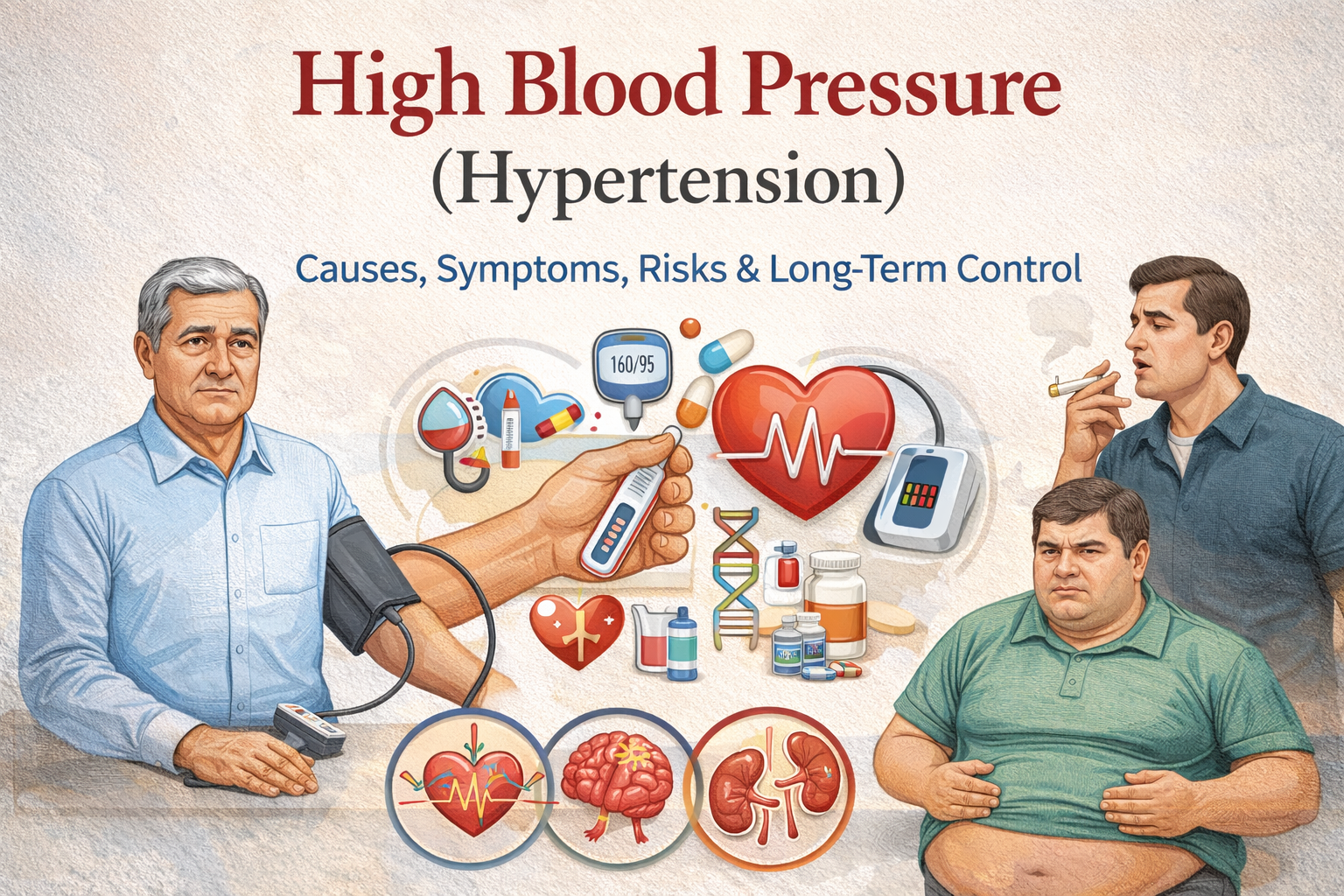
High blood pressure, medically known as hypertension, is one of the most widespread health conditions in the modern world. Millions of people live with high blood pressure without even realizing it, as the condition often develops silently. Despite the lack of early symptoms, uncontrolled high blood pressure can seriously damage vital organs such as the heart, brain, kidneys, and eyes.
Understanding hypertension, its causes, warning signs, and prevention methods is essential for maintaining long-term health and avoiding life-threatening complications.
Understanding Blood Pressure
Blood pressure refers to the force with which blood flows against the walls of the arteries. It is measured using two numbers:
- Systolic pressure – the pressure when the heart beats
- Diastolic pressure – the pressure when the heart rests between beats
A normal blood pressure reading is approximately 120/80 mmHg. When readings consistently exceed 140/90 mmHg, a person is usually diagnosed with high blood pressure.
What Is High Blood Pressure?
High blood pressure occurs when the arteries become narrowed or stiff, forcing the heart to work harder to pump blood throughout the body. Over time, this increased pressure can weaken blood vessels and damage organs.
Hypertension is often called the “silent killer” because many people do not experience symptoms until significant damage has already occurred.
Common Symptoms of High Blood Pressure
In its early stages, high blood pressure usually does not cause noticeable symptoms. However, when blood pressure rises to dangerous levels, some individuals may experience:
- Persistent headaches
- Dizziness or confusion
- Shortness of breath
- Chest pain or tightness
- Blurred or reduced vision
- Nosebleeds (in severe cases)
- Fatigue or weakness
Because symptoms may appear late, routine blood pressure monitoring is extremely important.
Who Is at Higher Risk?
Certain groups of people are more likely to develop high blood pressure, including:
- Adults over the age of 40
- Individuals with a family history of hypertension
- People who smoke regularly
- Overweight or obese individuals
- Patients with diabetes
- Those with a physically inactive lifestyle
- People who consume excessive salt or processed foods
- Individuals under long-term stress
Major Causes of High Blood Pressure
High blood pressure can develop due to a combination of lifestyle habits, genetic factors, and medical conditions. Common causes include:
- Excessive salt intake
- Lack of physical activity
- Obesity
- Smoking and alcohol consumption
- Chronic stress
- Poor sleep habits
- Kidney disease
- Hormonal disorders
In many cases, no single cause is identified, which is known as primary hypertension.
Health Complications of Uncontrolled Hypertension
If high blood pressure is not properly managed, it can lead to serious and sometimes irreversible complications, such as:
- Heart attack
- Stroke
- Heart failure
- Kidney damage or kidney failure
- Vision loss
- Sexual dysfunction
- Memory and concentration problems
These risks highlight the importance of early diagnosis and effective control.
How High Blood Pressure Is Diagnosed
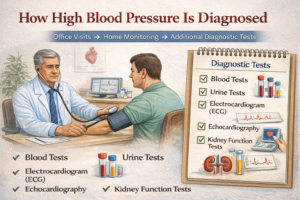
Doctors diagnose hypertension by taking multiple blood pressure readings on different occasions. In some cases, patients may be asked to monitor their blood pressure at home using a digital blood pressure monitor.
Additional tests such as blood tests, urine tests, and heart examinations may be recommended to assess organ damage.
Effective Ways to Control High Blood Pressure
High blood pressure can often be controlled through a combination of healthy lifestyle choices and medical treatment.
1. Healthy Eating Habits
A balanced diet rich in fruits, vegetables, whole grains, lean proteins, and healthy fats helps regulate blood pressure. Reducing salt intake is especially important.
2. Regular Physical Activity
Engaging in moderate exercise such as walking, cycling, or swimming for at least 30 minutes a day can significantly lower blood pressure.
3. Weight Management
Losing even a small amount of excess weight can have a positive impact on blood pressure levels.
4. Stress Management
Chronic stress contributes to hypertension. Relaxation techniques such as meditation, deep breathing, and adequate sleep can help reduce stress.
5. Medication
When lifestyle changes are not sufficient, doctors may prescribe medications to help control blood pressure. These medications should always be taken as directed.
Preventive Measures
Preventing high blood pressure is often easier than treating it. Helpful preventive steps include:
- Monitoring blood pressure regularly
- Avoiding smoking and alcohol
- Maintaining a healthy diet
- Staying physically active
- Managing stress effectively
- Following medical advice
Living a Healthy Life with High Blood Pressure
A diagnosis of high blood pressure does not mean you cannot live a normal life. With proper management, regular checkups, and healthy habits, many people successfully control their blood pressure and prevent complications.
Consistency and awareness are key to protecting your long-term health.
Conclusion
High blood pressure is a serious but manageable condition. Because it often develops silently, regular monitoring and early action are essential. By adopting a healthy lifestyle, managing stress, and following medical guidance, individuals can significantly reduce the risks associated with hypertension and lead a healthier, longer life.
Disclaimer: This article is intended for general informational purposes only and should not be considered medical advice
Health Samajh ek educational health blog hai jo Urdu aur English dono zabanon mein simple, clear aur trustworthy health information provide karta hai. Is blog ka maqsad logon ko general health, common diseases, healthy diet, fitness, lifestyle aur mental health jaise topics asaan alfaaz mein samjhana hai taa keh woh apni sehat ke hawale se behtar aur informed lifestyle choices kar saken. Health Samajh par maujood tamam content sirf educational aur informational purposes ke liye hota hai aur yeh professional medical advice ya doctor ka badal nahi.