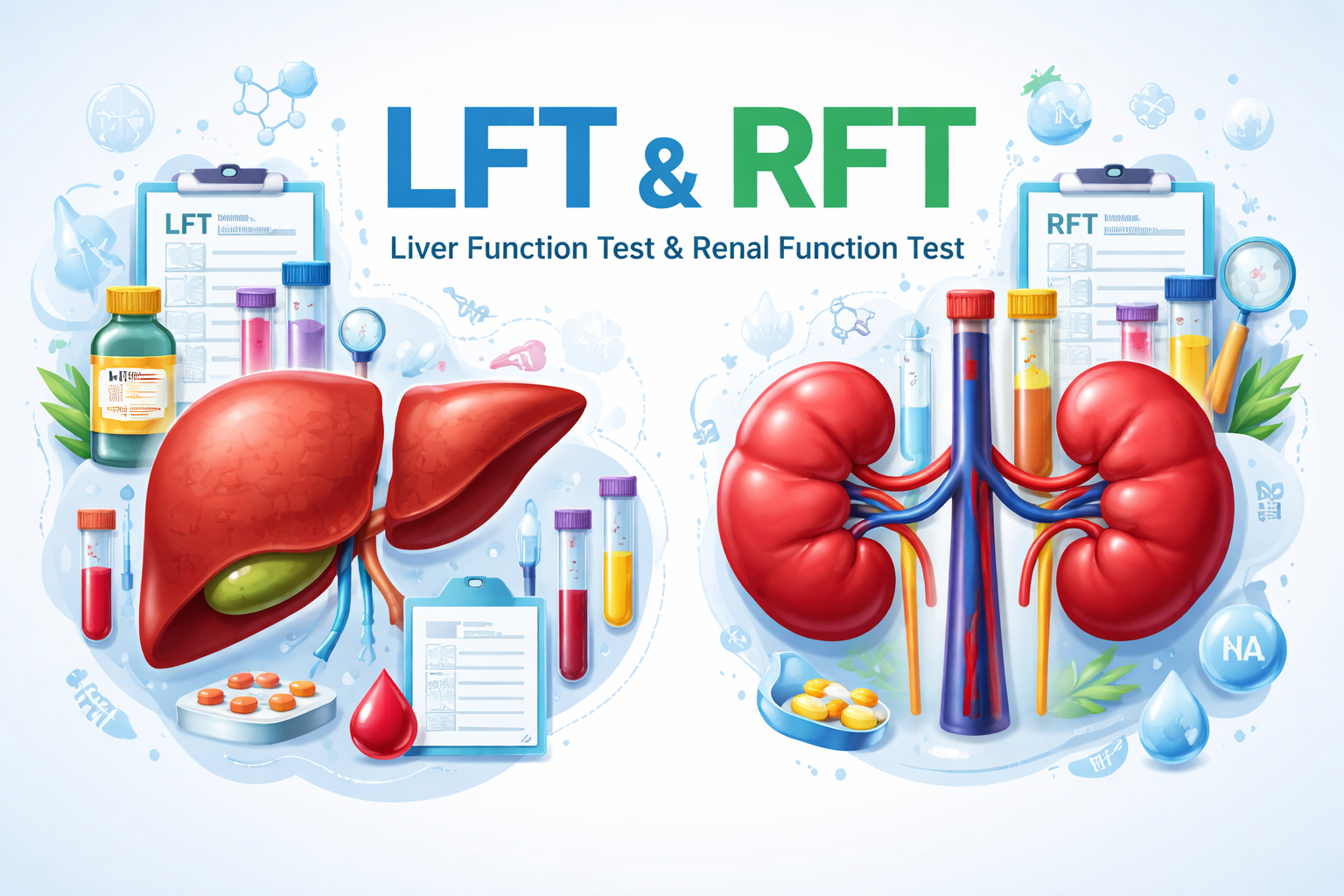
LFT AND RFT In the complex machinery of the human body, the liver and kidneys function as the primary filtration and detoxification units. Without their constant labor, the body would quickly succumb to the buildup of toxins and metabolic waste. To monitor the health of these vital organs, medical professionals rely on two essential blood panels: the Liver Function Test (LFT) and the Renal Function Test (RFT).
Understanding these tests is not just for medical students or doctors; it is a vital part of proactive health management for everyone. This guide provides an in-depth look at what these tests measure, why they are ordered, and how to maintain these organs for a long, healthy life.
Part 1: (LFT)The Liver Function Test – Monitoring the Body’s Chemical Factory
The liver is the largest internal organ and is responsible for over 500 essential functions, including protein synthesis, bile production for digestion, and the filtration of blood coming from the digestive tract before it passes to the rest of the body.
Why is an LFT Performed?
An LFT is usually ordered to screen for liver infections (like Hepatitis), monitor the progression of a disease, or check the side effects of certain medications that are known to stress the liver.
Key Components of an LFT Panel
- ALT (Alanine Transaminase): This is an enzyme found mostly in the liver.2 When liver cells are damaged or inflamed, ALT leaks into the bloodstream.3 High levels are a primary indicator of liver injury.4+2
- AST (Aspartate Transaminase): While also found in the liver, AST is present in the heart and muscles too.5 A high AST-to-ALT ratio can sometimes suggest alcohol-related liver damage.6+1
- Bilirubin: This is a yellow-orange pigment produced during the normal breakdown of red blood cells.7 If the liver isn’t processing bilirubin correctly, it builds up in the blood, leading to Jaundice (yellowing of the skin and eyes).8+1
- Albumin and Total Protein: Albumin is a protein made exclusively by the liver.9 Low levels indicate that the liver’s “manufacturing” capacity is declining, often seen in chronic liver diseases like Cirrhosis.
- ALP (Alkaline Phosphatase): This enzyme is related to the bile ducts.10 If ALP is elevated, it often points to a blockage in the bile ducts or gallbladder issues.11+1
Part 2: The Renal Function Test (RFT) – Measuring the Filtration Efficiency
The kidneys, or the renal system, are responsible for maintaining the body’s fluid balance and filtering out waste products like urea and creatinine.12 An RFT (also called a Kidney Function Test or KFT) is the gold standard for detecting early-stage kidney disease.
Key Components of an RFT Panel
- Serum Creatinine: Creatinine is a waste product that comes from the normal wear and tear of muscles.13 Healthy kidneys filter creatinine out of the blood and into the urine.14 If your blood levels of creatinine are rising, it is a direct sign that kidney function is slowing down.15+2
- BUN (Blood Urea Nitrogen): Urea nitrogen is a byproduct of protein breakdown.16 While high levels can indicate kidney issues, they can also be caused by high-protein diets or dehydration.
- eGFR (Estimated Glomerular Filtration Rate): This is arguably the most important number on your report. It calculates how much blood your kidneys filter every minute. A score below 60 for three months or more may indicate chronic kidney disease.
- Uric Acid: Excess uric acid can lead to kidney stones or a painful condition known as Gout.17 Monitoring this helps in preventing long-term renal damage.
- https://healthsamajh.com/
Part 3: Interpreting the Results – Normal Ranges
While every laboratory has slightly different reference ranges, the following are the general “normal” values for a healthy adult:
| Test Component | Normal Range (Approximate) |
| ALT (SGPT) | 7 to 55 Units/Liter (U/L) |
| AST (SGOT) | 8 to 48 Units/Liter (U/L) |
| Total Bilirubin | 0.1 to 1.2 mg/dL |
| Serum Creatinine | 0.7 to 1.3 mg/dL (Men) / 0.6 to 1.1 mg/dL (Women) |
| BUN | 7 to 20 mg/dL |
| EGFR18 | 90 mL/min/1.73m² or higher19 |
Part 4: Symptoms That Warrant Immediate Testing
Many liver and kidney diseases are “silent killers,” meaning they don’t show severe symptoms until the damage is advanced.20 You should consult a doctor and request these tests if you experience:
- Persistent Swelling (Edema): Specifically in the ankles, feet, or under the eyes.
- Changes in Urine: Very dark urine, bloody urine, or a significant decrease in frequency.
- Chronic Fatigue: Feeling exhausted despite getting enough sleep.
- Skin Issues: Intense itching (Pruritus) or easy bruising.21
- Loss of Appetite: Accompanied by nausea or abdominal swelling.22
Part 5: How to Prepare for Your Tests
To ensure the most accurate results, follow these preparation steps:
- Fasting: For a Liver Function Test, doctors usually recommend fasting (no food or drink except water) for 8 to 12 hours.23 This prevents food nutrients from interfering with enzyme readings.
- Hydration: Drink plenty of water before your RFT.24 Dehydration can falsely elevate your Urea and Creatinine levels.25+1
- Medication Disclosure: Some over-the-counter painkillers (like NSAIDs) or supplements can affect your liver and kidney markers.26 Always inform the lab technician about any medications you are taking.
Part 6: Lifestyle Strategies for Optimal Organ Health
Prevention is always better than a cure. Here is how you can protect your liver and kidneys naturally:
- Monitor Your Salt Intake: High salt consumption leads to high blood pressure, which is the leading cause of kidney failure.
- Limit Sugar and Processed Carbs: Excess sugar is converted into fat in the liver, leading to Non-Alcoholic Fatty Liver Disease (NAFLD).27
- Avoid Self-Medication: In many regions, people take painkillers or antibiotics without a prescription. These drugs are processed by the liver and kidneys and can cause “Drug-Induced Liver Injury” if misused.
- Maintain a Healthy Weight: Obesity is a significant risk factor for both liver cirrhosis and chronic kidney disease.28
Conclusion
The LFT and RFT are vital tools in the modern medical arsenal. By understanding the data these tests provide, you can take control of your health long before a minor issue becomes a major crisis. It is recommended that adults over the age of 30 undergo these screenings at least once a year as part of a routine check-up.
Disclaimer: This article is for informational purposes only and does not constitute medical advice. Always consult with a qualified healthcare professional to interpret your lab results.

Health Samajh ek educational health blog hai jo Urdu aur English dono zabanon mein simple, clear aur trustworthy health information provide karta hai. Is blog ka maqsad logon ko general health, common diseases, healthy diet, fitness, lifestyle aur mental health jaise topics asaan alfaaz mein samjhana hai taa keh woh apni sehat ke hawale se behtar aur informed lifestyle choices kar saken. Health Samajh par maujood tamam content sirf educational aur informational purposes ke liye hota hai aur yeh professional medical advice ya doctor ka badal nahi.