Introduction
Heart diseases are increasing rapidly around the world, and one of the main reasons behind this rise is unhealthy cholesterol levels. Many people hear the term “cholesterol test” or “lipid profile” but do not fully understand what it means or why it is important. A Lipid Profile Test is a simple blood test that helps evaluate the amount of fat present in the blood. This test plays a crucial role in assessing heart health and preventing serious conditions such as heart attacks and strokes.
This complete guide explains the Lipid Profile Test in clear and simple language, covering its purpose, procedure, normal values, preparation, benefits, and safety. The content is written in a natural human style and is suitable for WordPress health websites.
What Is a Lipid Profile Test?
A Lipid Profile Test, also known as a Cholesterol Test, is a blood test used to measure different types of fats (lipids) present in the blood. These fats are essential for the body, but high levels can increase the risk of heart disease.
The test provides detailed information about:
* Total Cholesterol
* Low-Density Lipoprotein (LDL)
* High-Density Lipoprotein (HDL)
* Triglycerides
Doctors use this test to evaluate cardiovascular risk and to monitor patients who are already on cholesterol-lowering treatment.
Why Is a Lipid Profile Test Done (Lipid Profile Test)?
The main purpose of a lipid profile test is to assess heart health. High cholesterol often does not cause noticeable symptoms, which is why many people are unaware of their condition until complications develop.
Common Reasons for Lipid Profile Test:
* To check the risk of heart disease
* To diagnose high cholesterol levels
* To monitor cholesterol-lowering treatment
* To evaluate the effect of lifestyle changes
* To assess risk in patients with diabetes or high blood pressure
Components of Lipid Profile Explained.
1. Total Cholesterol
Total cholesterol measures the overall amount of cholesterol in the blood. High total cholesterol increases the risk of heart disease.
2. LDL Cholesterol (Bad Cholesterol)
LDL is known as bad cholesterol because it can build up in the arteries, forming plaques that restrict blood flow.
3. HDL Cholesterol (Good Cholesterol)
HDL is considered good cholesterol because it helps remove excess cholesterol from the bloodstream and protects the heart.
4. Triglycerides
Triglycerides are another type of fat found in the blood and high levels are associated with an increased risk of heart disease, pancreatitis.
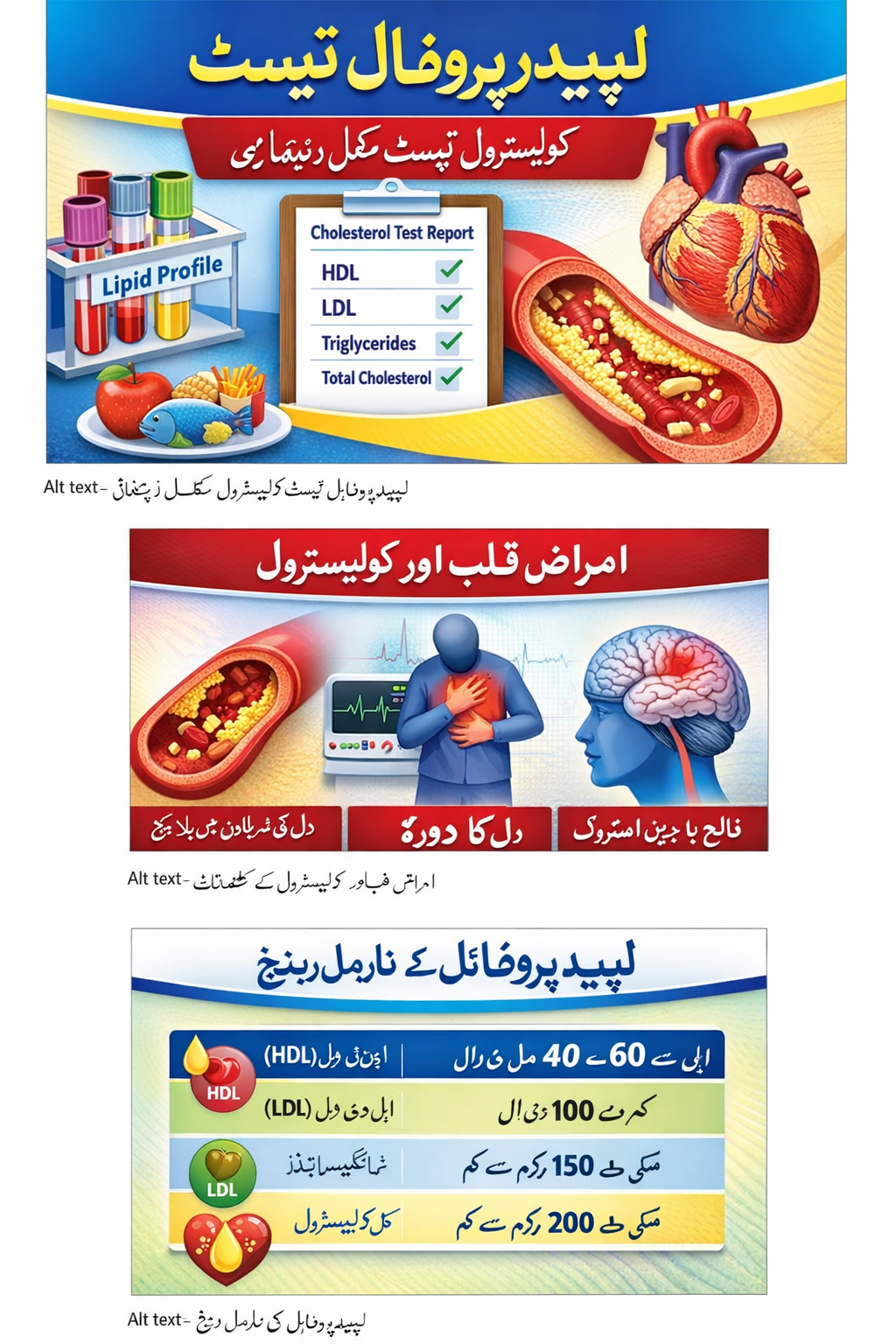
Normal Range of Lipid Profile Test
| Test Component Normal Range |
| Total Cholesterol Below 200 mg/dL |
| LDL Cholesterol Below 100 mg/dL |
| HDL Cholesterol Above 40 mg/dL (men), 50 mg/dL (women) |
| Triglycerides Below 150 mg/dL |
Values may vary slightly depending on the laboratory and patient’s age or health condition.
How Is a Lipid Profile Test Performed?
The lipid profile test is a simple blood test performed in a laboratory.
Step-by-Step Procedure:
1. The patient is usually asked to fast for 8–12 hours
2. A small blood sample is taken from a vein in the arm
3. The sample is sent to the laboratory for analysis
4. Results are usually available within 24 hours
The procedure is quick, safe, and causes minimal discomfort.
Preparation Before Lipid Profile Test
Proper preparation is important to ensure accurate results.
Preparation Guidelines:
* Fast for 8 to 12 hours before the test, Nothing eat
* Drink only water during fasting
* Avoid alcohol for at least 24 hours
* Inform the doctor about any medications
* Avoid heavy exercise before the test
Who Should Get a Lipid Profile Test?
Doctors recommend lipid profile testing for:
* Adults above 20 years (routine screening)
* importance, People with family history of heart disease
* Patients with diabetes or high blood pressure
* Overweight or obese individuals
* Smokers
* People with sedentary lifestyle
Benefits of Lipid Profile Test:
* Early detection of high cholesterol
* Helps prevent heart attacks and strokes
* Guides treatment decisions
* Monitors effectiveness of medications
* Simple and non-invasive test
Risks and Side Effects:
The lipid profile test is very safe. Minor side effects may include:
* Slight pain at needle site
* Mild bruising
Serious complications are extremely rare.
Cost of Lipid Profile Test:
The cost of a lipid profile test is affordable and varies by location.
( Average Cost in Pakistan )
* PKR 1,500 – 3,000
Prices may vary depending on the laboratory and city.
Lipid Profile Test and Heart Disease:
High LDL and triglyceride levels significantly increase the risk of heart disease. Regular lipid testing helps doctors identify risks early and recommend lifestyle changes or medications to protect heart health.
Tips to Improve Cholesterol Levels Naturally
* balance diet rich in fruits and vegetables
* Reduce intake of fried and processed foods
* Exercise regularly
* Maintain a healthy weight
* Quit smoking
* Manage stress effectively
Lipid Profile vs Cholesterol Test
A lipid profile is often called a cholesterol test, but it provides more detailed information by measuring multiple types of fats rather than just total cholesterol.
Is Lipid Profile Test Safe?
Yes, the lipid profile test is completely safe for people of all ages. It is a routine test widely used for preventive healthcare.
Do I need to fast before a lipid profile test?
fasting for 8–12 hours is required.
How often should cholesterol be checked?
Healthy adults should check cholesterol every 4–6 years, or more often if at risk..
Does high cholesterol cause symptoms?
High cholesterol usually has no symptoms and is detected through blood tests.
Conclusion:
The Lipid Profile Test is an essential tool for maintaining heart health. It helps detect unhealthy cholesterol levels early, allowing timely lifestyle changes and treatment. Regular testing, combined with a healthy lifestyle, can significantly reduce the risk of heart disease and improve overall well-being.
Disclaimer: This article is for informational purposes only and does not constitute medical advice. Always consult with a qualified healthcare professional to interpret your lab results.

Health Samajh ek educational health blog hai jo Urdu aur English dono zabanon mein simple, clear aur trustworthy health information provide karta hai. Is blog ka maqsad logon ko general health, common diseases, healthy diet, fitness, lifestyle aur mental health jaise topics asaan alfaaz mein samjhana hai taa keh woh apni sehat ke hawale se behtar aur informed lifestyle choices kar saken. Health Samajh par maujood tamam content sirf educational aur informational purposes ke liye hota hai aur yeh professional medical advice ya doctor ka badal nahi.