Introduction to Nipah Virus
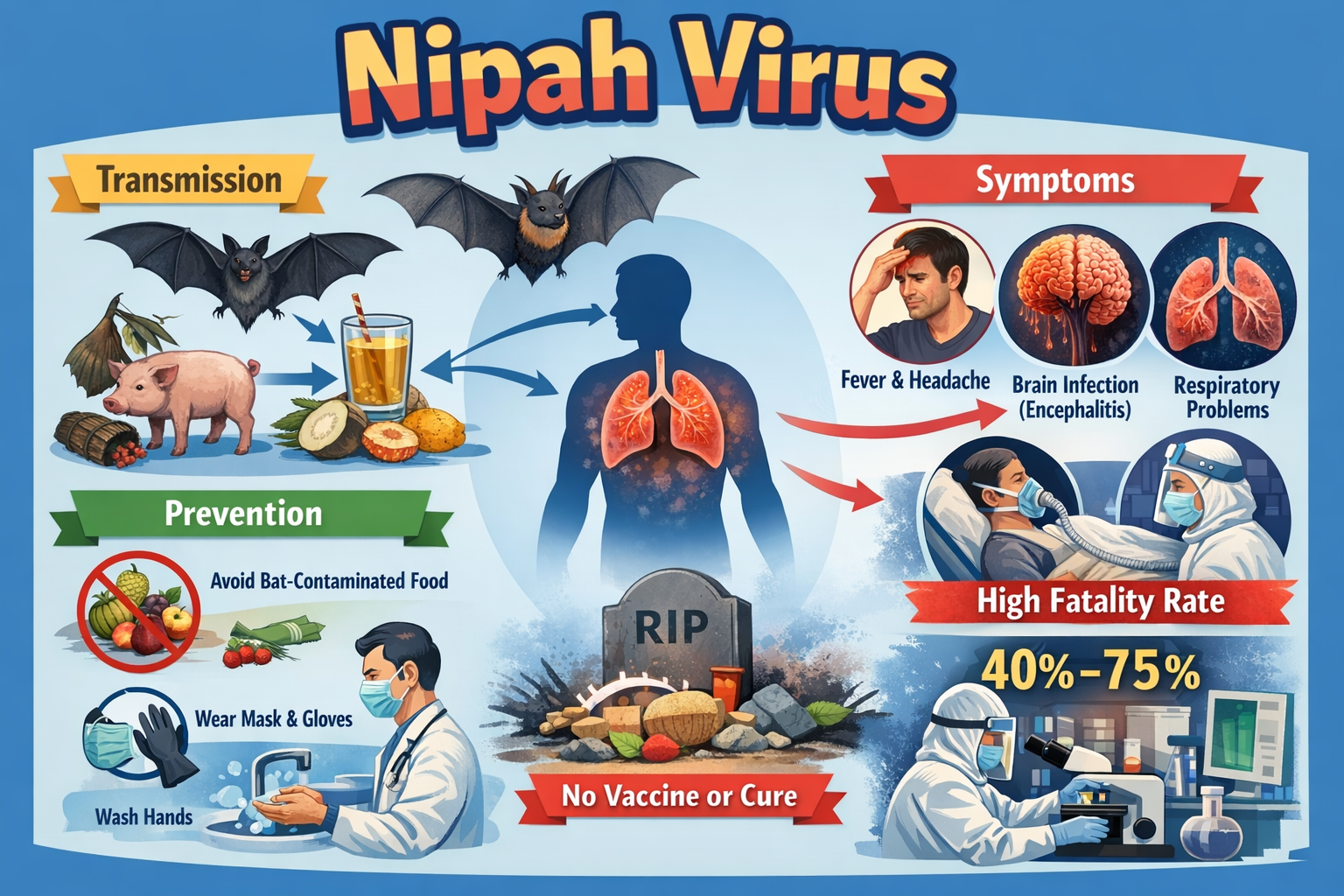
Nipah Virus (NiV) is a highly dangerous and emerging zoonotic virus that can cause severe illness in humans and animals. It is known for its high mortality rate and its ability to spread from animals to humans and, in some cases, from human to human. Nipah virus infections primarily affect the brain and respiratory system, leading to serious complications and death if not managed properly.
Because there is currently no specific cure or approved vaccine, Nipah virus is considered a major global public health threat. Understanding its causes, symptoms, transmission, diagnosis, treatment, and prevention is essential to reduce the risk of outbreaks and save lives.
What Is Nipah Virus?
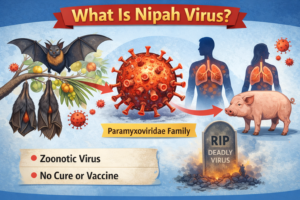
Nipah virus is a member of the Paramyxoviridae family and belongs to the genus Henipavirus. It was first identified in 1999 during an outbreak in Malaysia among pig farmers. Since then, multiple outbreaks have been reported in South and Southeast Asia, especially in Bangladesh and India.
Nipah virus is classified as a biosafety level-4 (BSL-4) pathogen, meaning it is extremely dangerous and requires maximum containment in laboratories.
Natural Reservoir of Nipah Virus
The natural hosts of Nipah virus are fruit bats, commonly known as flying foxes (Pteropus species). These bats carry the virus without showing symptoms and can transmit it to other animals and humans.
Fruit bats can contaminate:
- Fruits
- Date palm sap
- Water sources
Humans become infected when they consume food or drinks contaminated with bat saliva, urine, or feces.
How Nipah Virus Spreads
Nipah virus spreads through multiple routes, which makes it particularly dangerous.
1. Animal to Human Transmission
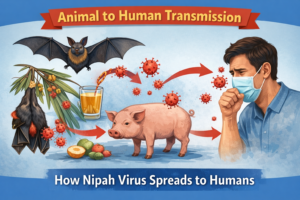
Humans can get infected by:
- Eating fruits contaminated by bats
- Drinking raw date palm sap contaminated by bats
- Direct contact with infected animals such as pigs
2. Human to Human Transmission
Nipah virus can spread through:
- Close contact with infected individuals
- Exposure to respiratory droplets
- Contact with bodily fluids such as saliva, blood, or urine
This mode of transmission has been confirmed in hospital and family settings.
3. Environmental Exposure
Poor hygiene, overcrowded living conditions, and lack of awareness increase the risk of infection.
Incubation Period of Nipah Virus
The incubation period usually ranges from 4 to 14 days, but in some cases, it can extend up to 45 days. During this time, infected individuals may not show symptoms but can still spread the virus.
Symptoms of Nipah Virus Infection
Symptoms vary from mild to severe and can progress rapidly.
Early Symptoms
- High fever
- Severe headache
- Muscle pain
- Fatigue
- Nausea and vomiting
Respiratory Symptoms
- Cough
- Shortness of breath
- Difficulty breathing
- Chest pain
Neurological Symptoms
- Dizziness
- Confusion
- Drowsiness
- Seizures
- Encephalitis (brain inflammation)
- Loss of consciousness or coma
In severe cases, symptoms can worsen within 24–48 hours.
Why Nipah Virus Is So Dangerous
Nipah virus is considered extremely dangerous due to:
- High fatality rate (40%–75%)
- No approved vaccine
- No specific antiviral treatment
- Rapid progression of disease
- Ability to spread between humans
Survivors may also suffer from long-term neurological complications.
Govt. UK blog Nipha virus
Diagnosis of Nipah Virus
Early diagnosis is critical but challenging.
Laboratory Tests
- RT-PCR test (detects viral RNA)
- ELISA antibody tests
- Virus isolation in specialized labs
Imaging Tests
- MRI or CT scan of the brain to detect encephalitis
- Chest X-ray for respiratory involvement
Diagnosis is usually done in high-security laboratories due to the virus’s risk level.
Treatment of Nipah Virus
Currently, there is no specific treatment approved for Nipah virus infection.
Supportive Care Includes:
- Hospitalization in isolation
- Oxygen therapy or ventilator support
- Intravenous fluids
- Fever and pain control
- Management of brain swelling
Some antiviral drugs like ribavirin have been used experimentally, but their effectiveness is not fully proven.
Intensive Care Management
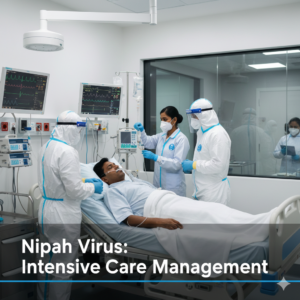
Severe cases require:
- ICU admission
- Continuous monitoring
- Mechanical ventilation
- Neurological support
Early supportive treatment significantly improves survival chances.
Prevention of Nipah Virus
Prevention is the most effective strategy.
Personal Prevention
- Avoid eating fruits partially eaten by bats
- Wash fruits thoroughly before consumption
- Avoid raw date palm sap
- Practice good hand hygiene
Community Measures
- Awareness campaigns
- Safe food handling practices
- Proper waste management
- Avoid contact with sick animals
Healthcare Settings
- Use of PPE (masks, gloves, gowns)
- Isolation of suspected patients
- Strict infection control protocols
Nipah Virus and Global Health Risk
The World Health Organization (WHO) has listed Nipah virus as a priority disease due to its epidemic potential. Climate change, deforestation, and increased human-animal interaction increase the risk of future outbreaks.
Countries worldwide are advised to strengthen surveillance and preparedness systems.
Nipah Virus in South Asia
Most outbreaks have occurred in:
- Bangladesh
- India (Kerala)
In these regions, human-to-human transmission has been well documented, making strict containment essential.
Can Nipah Virus Be Cured?
At present:
- ❌ No cure
- ❌ No licensed vaccine
- ✅ Only supportive treatment
However, research on vaccines and antiviral drugs is ongoing.
Long-Term Effects in Survivors
Some survivors experience:
- Memory loss
- Seizure disorders
- Personality changes
- Chronic fatigue
- Nipha Virus
Regular medical follow-up is essential.
When to See a Doctor
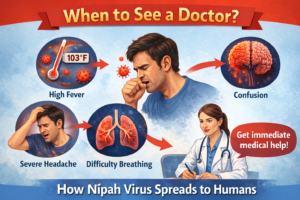
Seek immediate medical attention if:
- High fever with confusion
- Severe headache
- Difficulty breathing
- Contact with a suspected Nipah case
Early hospitalization can save lives.
Frequently Asked Questions (FAQs)
Is Nipah virus contagious?
Yes, it can spread from person to person.
Is Nipah virus airborne?
It spreads mainly through close contact and respiratory droplets.
Is there a vaccine for Nipah virus?
No approved vaccine yet.
Conclusion
Nipah virus is one of the most dangerous emerging infectious diseases in the world. Its high mortality rate, lack of treatment, and potential for human-to-human transmission make it a serious global health threat. Awareness, prevention, early diagnosis, and strong healthcare systems are the only effective tools to control Nipah virus outbreaks.
By understanding how Nipah virus spreads and how to protect ourselves, we can reduce the risk of future epidemics and save lives.
Disclaimer: This article is intended for general informational purposes only and should not be considered medical advice
Health Samajh ek educational health blog hai jo Urdu aur English dono zabanon mein simple, clear aur trustworthy health information provide karta hai. Is blog ka maqsad logon ko general health, common diseases, healthy diet, fitness, lifestyle aur mental health jaise topics asaan alfaaz mein samjhana hai taa keh woh apni sehat ke hawale se behtar aur informed lifestyle choices kar saken. Health Samajh par maujood tamam content sirf educational aur informational purposes ke liye hota hai aur yeh professional medical advice ya doctor ka badal nahi.