Tuberculosis (TB) is a serious infectious disease that mainly affects the lungs but can also spread to other parts of the body such as the brain, bones, kidneys, and lymph nodes. TB remains a major public health concern, especially in developing countries. Early diagnosis through proper TB testing and timely treatment is essential to control the disease and prevent its spread. This article provides a complete and easy-to-understand guide about TB tests, how they are performed, and the available treatment options.
What Is Tuberculosis (TB)?
Tuberculosis is caused by a bacterium called Mycobacterium tuberculosis. The bacteria spread through the air when a person with active TB coughs, sneezes, talks, or spits. People who inhale these bacteria may become infected, especially if their immune system is weak.
TB can be:
- Pulmonary TB (affecting the lungs)
- Extrapulmonary TB (affecting other organs)
Not everyone who gets infected becomes sick. Some people develop latent TB, while others develop active TB disease.
Types of TB
Pulmonary TB
Pulmonary TB affects the lungs and is the most common and contagious form of the disease. It spreads easily from person to person through the air.
Extrapulmonary TB
This form of TB affects organs outside the lungs, such as:
- Lymph nodes
- Bones and joints
- Brain (TB meningitis)
- Kidneys
- Abdomen
Extrapulmonary TB is usually less contagious but still dangerous if left untreated.
Symptoms of Tuberculosis
Common symptoms of TB include:
- Persistent cough lasting more than 2 weeks
- Coughing up blood or sputum
- Chest pain
- Fever and chills
- Night sweats
- Weight loss
- Loss of appetite
- Fatigue and weakness
If these symptoms are present, TB testing should be done immediately.
What Is a TB Test?
A TB test is a medical examination used to detect the presence of TB bacteria in the body. TB tests help determine whether a person has:
- Active TB disease
- Latent TB infection
- Drug-resistant TB
Doctors may recommend one or more tests depending on symptoms, medical history, and risk factors.
Types of TB Tests
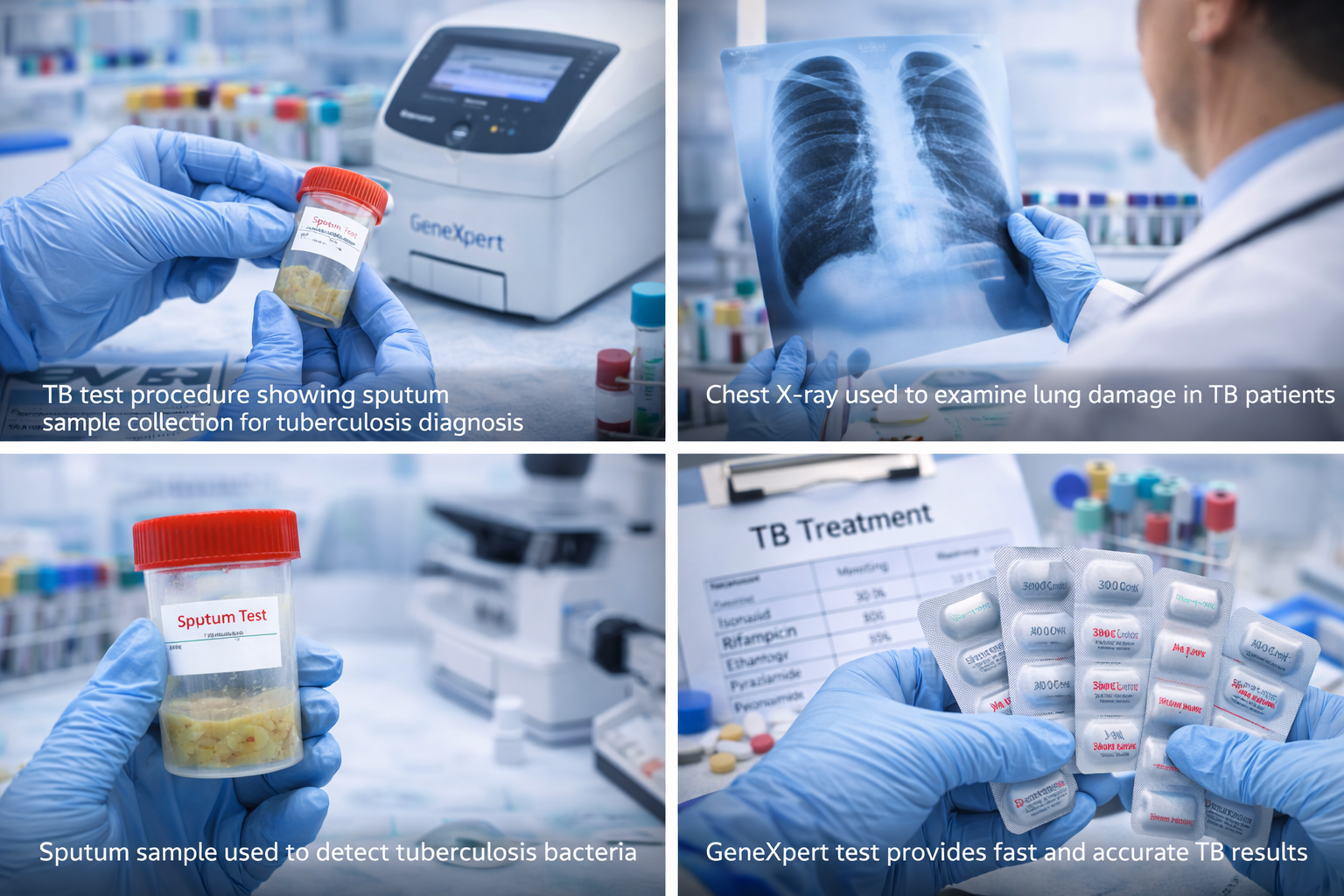
Sputum Test
The sputum test is one of the most important tests for diagnosing pulmonary TB.
Procedure:
- The patient coughs deeply to produce sputum (mucus from the lungs)
- The sample is collected in a sterile container
- It is examined in a laboratory for TB bacteria
This test confirms whether the patient is infectious.
GeneXpert Test
The GeneXpert test is a modern and highly accurate TB test.
Key Features:
- Detects TB bacteria within 2 hours
- Identifies resistance to rifampicin (a key TB drug)
- Very reliable and widely used
This test is especially useful for early diagnosis and drug-resistant TB detection.
Chest X-Ray
A chest X-ray helps identify lung damage caused by TB.
Important Note:
A chest X-ray alone cannot confirm TB, but it helps doctors decide further testing.
Mantoux (Tuberculin Skin) Test
The Mantoux test checks for TB infection by injecting a small amount of tuberculin into the skin.
Procedure:
- Injection is given under the skin of the forearm
- After 48–72 hours, the swelling is measured
This test is commonly used for children and latent TB screening.
TB Blood Test (IGRA)
Interferon-Gamma Release Assays (IGRA) are blood tests that detect immune response to TB bacteria.
Advantages:
- Single visit required
- Not affected by BCG vaccination
- Useful for latent TB detection
What Is Latent TB?
Latent TB means:
- TB bacteria are present in the body
- No symptoms appear
- The person is not contagious
However, latent TB can turn into active TB if the immune system becomes weak. Preventive treatment is often recommended.
Who Should Get a TB Test?
TB testing is recommended for:
- People with TB symptoms
- Close contacts of TB patients
- Healthcare workers
- People with weak immunity (HIV, diabetes)
- Smokers and malnourished individuals
Early testing helps prevent complications and transmission.
TB Treatment
TB is a curable disease if treated properly and completely.
Duration of Treatment
- Drug-sensitive TB: 6 months
- Drug-resistant TB: 9–24 months
Common TB Medicines
Standard TB treatment includes a combination of antibiotics such as:
- Isoniazid
- Rifampicin
- Ethambutol
- Pyrazinamide
These medicines must be taken exactly as prescribed.
DOTS Program
DOTS (Directly Observed Treatment, Short-course) is a global TB control strategy.
Benefits of DOTS:
- Ensures complete treatment
- Prevents drug resistance
- Improves recovery rates
Patients take medicines under supervision to avoid missed doses.
Side Effects of TB Medicines
Some patients may experience:
- Nausea or vomiting
- Loss of appetite
- Yellowing of eyes or skin
- Joint pain
Any side effects should be reported to a doctor immediately.
Precautions During TB Treatment
- Take medicines daily without skipping
- Do not stop treatment early
- Eat a balanced and nutritious diet
- Avoid smoking and alcohol
- Cover mouth while coughing
- Maintain proper hygiene
Prevention of Tuberculosis
TB can be prevented by:
- BCG vaccination (especially for children)
- Early detection and treatment
- Proper ventilation in living spaces
- Strengthening the immune system
TB Situation and Free Treatment
In many countries, including Pakistan, TB diagnosis and treatment are available free of cost in government hospitals under national TB programs.
When to See a Doctor
Consult a doctor immediately if:
- Cough lasts more than 2 weeks
- Blood appears in sputum
- Unexplained weight loss occurs
- A family member has TB
Importance of Early TB Diagnosis
Early diagnosis of tuberculosis plays a crucial role in successful treatment and reducing the spread of infection. When TB is detected at an early stage, the disease can be treated more effectively with fewer complications. Delayed diagnosis often leads to severe lung damage, spread of infection to other organs, and increased risk of transmitting TB to others.
Early TB testing helps doctors start treatment on time, monitor patient progress, and reduce the burden on healthcare systems. In high-risk populations, routine screening can save lives and prevent outbreaks.
TB Testing in Children and Elderly
TB testing in children and elderly individuals requires special attention because symptoms may be mild or different from adults.
TB in Children
Children may not show typical TB symptoms such as persistent cough. Instead, signs may include:
Poor weight gain
Fever without clear cause
Fatigue
Swollen lymph nodes
Mantoux test, chest X-ray, and IGRA blood tests are commonly used for children. Early testing is important to prevent long-term complications.
TB in Elderly
Older adults may experience:
Weak immune response
Delayed symptoms
Higher risk of severe disease
Regular screening and careful monitoring are essential for elderly patients, especially those with chronic illnesses.
Drug-Resistant TB
Drug-resistant TB occurs when TB bacteria do not respond to standard medications. This usually happens due to:
Incomplete treatment
Skipping doses
Stopping medicines early
Incorrect drug use
Types of Drug-Resistant TB
MDR-TB (Multidrug-Resistant TB): Resistant to at least isoniazid and rifampicin
XDR-TB : Resistant to most TB drugs
Diagnosis of drug-resistant TB requires advanced tests like GeneXpert and culture sensitivity tests. Treatment is longer, more expensive, and requires strict medical supervision.
Role of Nutrition in TB Recovery
Proper nutrition is an essential part of TB treatment. TB weakens the immune system and causes weight loss, making recovery slower.
Recommended Nutritional Support
High-protein foods (eggs, milk, pulses)
Fresh fruits and vegetables
Adequate fluids
Iron and vitamin-rich diet
A well-balanced diet helps strengthen immunity, improves drug effectiveness, and speeds up recovery.
TB and Public Awareness
Public awareness is key to controlling TB. Many people delay testing due to fear, stigma, or lack of knowledge. Educating communities about TB symptoms, free testing facilities, and complete treatment
pcan significantly reduce TB cases.
Governments and health organizations run awareness campaigns to:
Encourage early testing
Reduce stigma
Promote treatment completion
Prevent drug resistance
Follow-Up and Monitoring During Treatment
Regular follow-up is necessary during TB treatment to:
Monitor treatment response
Detect side effects early
Ensure treatment completion
Prevent relapse
Patients are advised to attend scheduled check-ups and complete all laboratory tests as recommended by their doctor.
Final Words
Tuberculosis remains a global health challenge, but it is preventable and curable with proper care. TB tests are the foundation of early diagnosis and successful treatment. By recognizing symptoms early, undergoing timely testing, following prescribed treatment, and maintaining a healthy lifestyle, TB can be controlled effectively.
Strong healthcare systems, public awareness, and patient cooperation are essential to achieving a TB-free future. Early action not only protects individuals but also safeguards communities from the spread of this serious disease.
Conclusion
Tuberculosis is a serious but completely treatable disease. TB tests play a vital role in early diagnosis, proper treatment, and prevention of disease spread. By understanding TB testing methods, symptoms, and treatment options, people can protect themselves and their communities. Timely testing, complete treatment, and proper care can save lives and help eliminate TB.
Disclaimer: This article is intended for general informational purposes only and should not be considered medical advice.

Health Samajh ek educational health blog hai jo Urdu aur English dono zabanon mein simple, clear aur trustworthy health information provide karta hai. Is blog ka maqsad logon ko general health, common diseases, healthy diet, fitness, lifestyle aur mental health jaise topics asaan alfaaz mein samjhana hai taa keh woh apni sehat ke hawale se behtar aur informed lifestyle choices kar saken. Health Samajh par maujood tamam content sirf educational aur informational purposes ke liye hota hai aur yeh professional medical advice ya doctor ka badal nahi.